
Ties that stress
the new family imbalance
Our rough guess is there are 65,000 words in this book.
At a pace averaging 250 words per minute, this book will take 4 hours and 20 minutes to read. With a half hour per day, this will take 9 days to read.
How long will it take you?
This book will take an estimated to read at a reading speed averaging words per minute. With 30 minutes per day, this will take to read.
Enter your reading speedYou can take one of our WPM reading speed tests to find your reading speed.
Create a free account to track your reading progress, build your reading list, and set reading goals.
We earn a commission on purchases
Author
Publication
1994 - Harvard University Press, Cambridge, Mass, Massachusetts
Language
English
Word Count
65,000 words, Guess
Page Count
260 pages
Identifiers
- Open LibraryOL1087148M
- ISBN-10067489149X
- OCLC Control Number30319211
- Library of Congress Control Number94011126
- LibraryThing1288068
and 1 more
- Goodreads875251
Classifications
- DDC306.85/0973
- LCCHQ536 .E44 1994
Description
What has happened to the American family in the last few decades? And what are these changes doing to our children? A renowned child psychologist and author of several influential works on child development, David Elkind has devoted his career to these urgent questions. This eloquent book - the culmination of his inquiry - puts together all the pieces, puzzling facts, and conflicting accounts, and shows us as never before what the American family has become. Today's postmodern family is under enormous stress. And as a result, the needs of hurried children have been sacrificed to the needs of their harried parents. Childhood innocence has been supplanted by the illusion of childhood competence; teenage immaturity has given way to pseudo-sophistication; and parental intuition has been traded in for a mechanical reliance on technique. These changes and a host of others have undermined the well-being of children and adolescents. From Freud to Friedan to Foucault, Elkind traces the roots of the postmodern family back to the failure of the modern nuclear family and its supporting institutions - the media, the so-called helping professions, the legal system, and the schools - to meet the needs of parents. The new postmodern family is more flexible, more permeable, more urbane, but also out of balance because it fails to meet the needs of children. Treated like miniature adults, today's children and adolescents go without the protection and security they need, while their once-sheltered baby-boomer parents, facing new economic pressures for which they are unprepared, secretly wonder why they've never really felt like grown-ups. But all is not bleak. Elkind finds evidence of an emerging vital family that melds the best of the modern and postmodern, one in which the needs of all family members are held in a dynamic, if delicate, balance. Many books have decried the decline in family values, the negative impact of divorce, the increase in single-mother families, and impoverished prospects for our children. But none has pulled all these fragments together as Elkind's does and put them into a solid framework, one that finally makes sense of the way we were, and what we as families may become.
Subjects
Other Editions
- Ties that stress: the new family imbalance
Similar Books
Family Transitions
E. Mavis Hetherington, Philip A. Cowan, E. Mavis Hetherington

Haven in a heartless world: the family beseiged
Christopher Lasch.
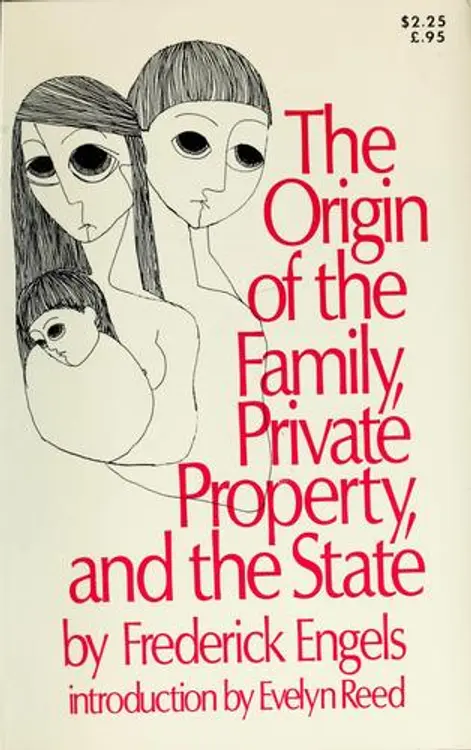
The origin of the family, private property, and the state.
Introd. by Evelyn Reed.

The Family in the Modern Age: More than a Lifestyle Choice
Brigitte Berger

Marriages and families: changes, choices, and constraints
Nijole V. Benokraitis.
Reader Reviews
No reviews yet for this book.
Be the first to share your thoughts!