
Improving poor people
the welfare state, the "underclass," and urban schools as history
Our rough guess is there are 44,750 words in this book.
At a pace averaging 250 words per minute, this book will take 2 hours and 59 minutes to read. With a half hour per day, this will take 6 days to read.
How long will it take you?
This book will take an estimated to read at a reading speed averaging words per minute. With 30 minutes per day, this will take to read.
Enter your reading speedYou can take one of our WPM reading speed tests to find your reading speed.
Create a free account to track your reading progress, build your reading list, and set reading goals.
We earn a commission on purchases
Author
Publication
1995 - Princeton University Press, Princeton, N.J, New Jersey
Language
English
Word Count
44,750 words, Guess
Page Count
179 pages
Identifiers
- Open LibraryOL1105945M
- ISBN-100691029946
- OCLC Control Number31131540
- OCLC Control Numberimprovingpoorpeo0000katz
- Library of Congress Control Number94031111
and 2 more
- LibraryThing154027
- Goodreads608033
Classifications
- DDC362.5/0973
- LCCHV91 .K348 1995
Description
"There are places where history feels irrelevant, and America's inner cities are among them," acknowledges Michael Katz, in expressing the tensions between activism and scholarship. But this major historian of urban poverty realizes that the pain in these cities has its origins in the American past. To understand contemporary poverty, he looks particularly at an old attitude: because many nineteenth-century reformers traced extreme poverty to drink, laziness, and other forms of bad behavior, they tried to use public policy and philanthropy to improve the character of poor people, rather than to attack the structural causes of their misery. Showing how this misdiagnosis has afflicted today's welfare and educational systems, Katz draws on his own experiences to introduce each of four topics - the welfare state, the "underclass" debate, urban school reform, and the strategies of survival used by the urban poor. Uniquely informed by his personal involvement, each chapter also illustrates the interpretive power of history by focusing on a strand of social policy in the nineteenth and twentieth centuries: social welfare from the poorhouse era through the New Deal, ideas about poverty from the undeserving poor to the "underclass," and the emergence of public education through the radical school reform movement now at work in Chicago. Why have American governments proved unable to redesign a welfare system that will satisfy anyone? Why has public policy proved unable to eradicate poverty and prevent the deterioration of major cities? What strategies have helped poor people survive the poverty endemic to urban history? How did urban schools become unresponsive bureaucracies that fail to educate most of their students? Are there fresh, constructive ways to think about welfare, poverty, and public education? Throughout the book Katz shows how interpretations of the past, grounded in analytic history, can free us of comforting myths and help us to reframe discussions of these great public issues.
First Sentence
LATE IN 1992, Governor Robert Casey of Pennsylvania appointed me to his Task Force on Reducing Welfare Dependency.
Excerpt
LATE IN 1992, Governor Robert Casey of Pennsylvania appointed me to his Task Force on Reducing Welfare Dependency.
Subjects
Topics
Places
Other Editions
- Improving poor people: the welfare state, the "underclass," and urban schools as history
Similar Books

Down and out in America: the origins of homelessness
Peter H. Rossi.

Paths to homelessness: extreme poverty and the urban housing crisis
Doug A. Timmer, D. Stanley Eitzen, and Kathryn D. Talley.

Social policy and social work: critical essays on the welfare state
Robert M. Moroney.

The tragedy of American compassion
Marvin Olasky ; preface by Charles Murray.
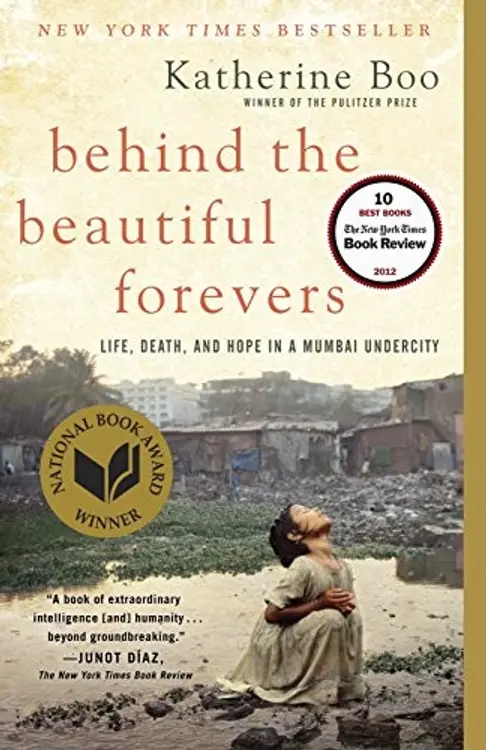
Behind the Beautiful Forevers: Life, Death, and Hope in a Mumbai Undercity
Katherine Boo

School Lunch Politics: The Surprising History of America's Favorite Welfare Program (Politics and Society in Twentieth Century America)
Susan Levine

Imagining the Modern City
James Donaldson
Origins of British Social Policy
Pat Thane
Reader Reviews
No reviews yet for this book.
Be the first to share your thoughts!