
Science and technology in world history
an introduction
2nd ed.
Our rough guess is there are 124,000 words in this book.
At a pace averaging 250 words per minute, this book will take 8 hours and 16 minutes to read. With a half hour per day, this will take 17 days to read.
How long will it take you?
This book will take an estimated to read at a reading speed averaging words per minute. With 30 minutes per day, this will take to read.
Enter your reading speedYou can take one of our WPM reading speed tests to find your reading speed.
Create a free account to track your reading progress, build your reading list, and set reading goals.
We earn a commission on purchases
Contributions
- Dorn, Harold, 1928- - Contributor
Publication
2006 - Johns Hopkins University Press, Baltimore, Maryland
Language
English
Word Count
124,000 words, Guess
Page Count
496 pages
Identifiers
- Open LibraryOL3411342M
- ISBN-100801883598
- OCLC Control Number226049930
- OCLC Control Number61687847
- OCLC Control Numberscienceancientwo00mccl
and 3 more
- Library of Congress Control Number2005027399
- LibraryThing1115176
- Goodreads40947
Classifications
- DDC509
- LCCQ125 .M414 2006
Description
In modern industrial society, the tie between science and technology seems clear, even inevitable. But historically, as James E. McClellan III and Harold Dorn remind us, the connection has been far less apparent. For much of human history, technology depended more on the innovation of skilled artisans than it did on the speculation of scientists. Technology as "applied science," the authors argue, emerged relatively recently, as industry and governments began funding scientific research that would lead directly to new or improved technologies. In Science and Technology in World History, McClellan and Dorn offer an introduction to this changing relationship. McClellan and Dorn review the historical record beginning with the thinking and tool making of prehistoric humans. Neolithic people, for example, developed metallurgy of a sort, using naturally occurring raw copper, and kept systematic records of the moon's phases. Neolithic craftsmen possessed practical knowledge of the behavior of clay, fire, and other elements of their environment, but though they may have had explanations for the phenomena of their crafts, they toiled without any systematic science of materials or the self-conscious application of theory to practice. McClellan and Dorn identify two great scientific traditions: the useful sciences, patronized by the state from the dawn of civilization, and scientific theorizing, initiated by the ancient Greeks. Theirs is a survey of the historical twists and turns of these traditions, leading to the science of our own day. Without neglecting important figures of Western science such as Newton and Einstein, the authors demonstrate the great achievements of non-Western cultures. They remind us that scientific traditions took root in China, India, and Central and South America, as well as in a series of Near Eastern empires, during late antiquity and the Middle Ages, including the vast region that formed the Islamic conquest. From this comparative perspective, the authors explore the emergence of Europe as a scientific and technological power. Continuing their narrative through the Manhattan Project, NASA, and modern medical research, the authors weave the converging histories of science and technology into an integrated, perceptive, and highly readable narrative.
Description
https://cakesdecor.com/https://cakesdecor.com/https://cakesdecor.com/https://cakesdecor.com/https://cakesdecor.com/https://cakesdecor.com/https://cakesdecor.com/https://cakesdecor.com/https://cakesdecor.com/
Subjects
Topics
Other Editions
- Science and technology in world history: an introduction
Similar Books
The structure of scientific revolutions.
Dennis Holland, Thomas S. Kuhn

A Short History of Nearly Everything
Bill Bryson.

Hitler's gift: scientists who fled Nazi Germany
Jean Medawar and David Pyke.

The discoverers
Daniel J. Boorstin.
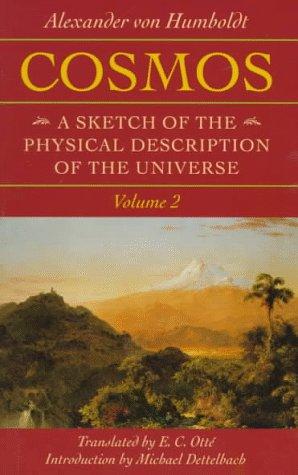
Cosmos: a sketch of a physical description of the universe
by Alexander von Humboldt ; translated from the German by E.C. Otté ; introduction by Michael Dettelbach.
Leviathan and the air-pump: Hobbes, Boyle, and the experimental life : including a translation of Thomas Hobbes, Dialogus physicus de natura aeris by Simon Schaffer
Steven Shapin & SimonSchaffer.

Men, Machines, and Modern Times
Elting E. Morison

Longitude: The True Story of a Lone Genius Who Solved the Greatest Scientific Problem of His Time
Dava Sobel, Irene Aldasoro Katarain, William J. H. Andrewes
Reader Reviews
No reviews yet for this book.
Be the first to share your thoughts!