
Medieval reading
grammar, rhetoric, and the classical text
Our rough guess is there are 58,750 words in this book.
At a pace averaging 250 words per minute, this book will take 3 hours and 55 minutes to read. With a half hour per day, this will take 8 days to read.
How long will it take you?
This book will take an estimated to read at a reading speed averaging words per minute. With 30 minutes per day, this will take to read.
Enter your reading speedYou can take one of our WPM reading speed tests to find your reading speed.
Create a free account to track your reading progress, build your reading list, and set reading goals.
We earn a commission on purchases
Author
Publication
1996 - Cambridge University Press, Cambridge [England], England
Language
English
Word Count
58,750 words, Guess
Page Count
235 pages
Identifiers
- Open LibraryOL797524M
- ISBN-100521472571
- OCLC Control Number33041971
- OCLC Control Numbermedievalreadingg00reyn_183
- Library of Congress Control Number95033499
and 1 more
- LibraryThing3327776
Classifications
- DDC478/.007/04
- LCCPA2061 .R48 1996
Description
This book argues for a radically new approach to the history of reading and literacy in the Middle Ages. It investigates the use of complex literary texts as the basis of elementary instruction in the Latin language and, using medieval teachers' notes (glosses) on a classical text (Horace's Satires) and a selection of other unpublished manuscript materials, it demonstrates that the reading of classical literature was profoundly shaped by the demands of acquiring Latin literacy through the arts of grammar and rhetoric. The resolutely literal readings of Latin texts found in these educational and institutional contexts call for a reassessment of the relationship of Latin and vernacular discourses in medieval culture, and of some central notions in medieval hermeneutics, notably allegory and authorial intention.
First Sentence
In recent years, the shift of power to the reader has been marked.
Excerpt
In recent years, the shift of power to the reader has been marked.
Subjects
Topics
Places
Series Statement
- Cambridge studies in medieval literature ;
Other Editions
- Medieval reading: grammar, rhetoric, and the classical text
Similar Books
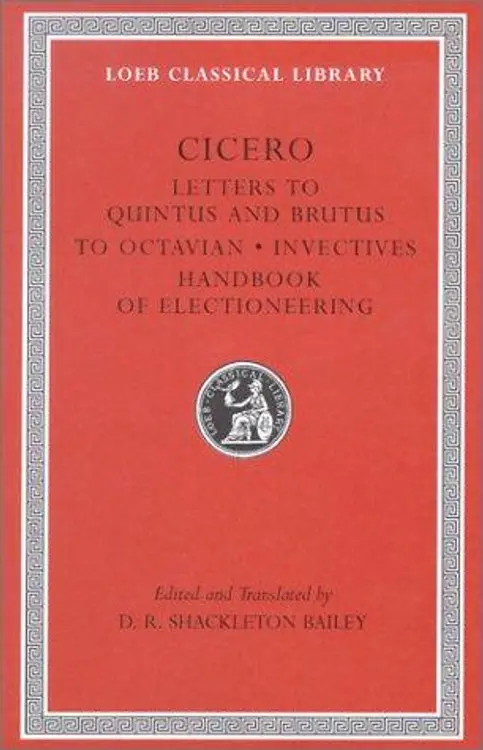
Cicero: Letters to Quintus and Brutus. Letter Fragments. Letter to Octavian. Invectives. Handbook of Electioneering; D. Letters (Loeb Classical Library No. 462)
Cicero, D. R. Shackleton Bailey

The Consolation of Philosophy
Boethius

Studies in Medieval and Renaissance Literature
C. S. Lewis

Metamorphoses: A New Translation by Charles Martin
Ovid, Bernard Knox, Charles Martin

Aristotle's Poetics: translation and analysis
by Kenneth A. Telford
Aristotle's Metaphysics
Aristotle
Reader Reviews
No reviews yet for this book.
Be the first to share your thoughts!