
Well-behaved women seldom make history
1st ed.
Our rough guess is there are 71,000 words in this book.
At a pace averaging 250 words per minute, this book will take 4 hours and 44 minutes to read. With a half hour per day, this will take 10 days to read.
How long will it take you?
This book will take an estimated to read at a reading speed averaging words per minute. With 30 minutes per day, this will take to read.
Enter your reading speedYou can take one of our WPM reading speed tests to find your reading speed.
Create a free account to track your reading progress, build your reading list, and set reading goals.
We earn a commission on purchases
Author
Publication
2007 - Alfred A. Knopf, New York, New York (State)
Language
English
Word Count
71,000 words, Guess
Page Count
284 pages
Identifiers
- Open LibraryOL17844974M
- ISBN-139781400041596
- OCLC Control Number77116760
- OCLC Control Numberwellbehavedwomen00ulri
- Library of Congress Control Number2006100581
and 2 more
- Goodreads473815
- LibraryThing3598743
Classifications
- DDC305.4209182/1
- LCCHQ1121 .U517 2007
Description
"They didn't ask to be remembered," Pulitzer Prize-winning author Laurel Ulrich wrote in 1976 about the pious women of colonial New England. And then she added a phrase that has since gained widespread currency: "Well-behaved women seldom make history." Today those words appear almost everywhere--on T-shirts, mugs, bumper stickers, plaques, greeting cards, and more. But what do they really mean? In this engrossing volume, Laurel Ulrich goes far beyond the slogan she inadvertently created and explores what it means to make history.Her volume ranges over centuries and cultures, from the fifteenth-century writer Christine de Pizan, who imagined a world in which women achieved power and influence, to the writings of nineteenth-century suffragist Elizabeth Cady Stanton and twentieth-century novelist Virginia Woolf. Ulrich updates de Pizan's Amazons with stories about women warriors from other times and places. She contrasts Woolf's imagined story about Shakespeare's sister with biographies of actual women who were Shakespeare's contemporaries. She turns Stanton's encounter with a runaway slave upside down, asking how the story would change if the slave rather than the white suffragist were at the center. She uses daybook illustrations to look at women who weren't trying to make history, but did. Throughout, she shows how the feminist wave of the 1970s created a generation of historians who by challenging traditional accounts of both men's and women's histories stimulated more vibrant and better-documented accounts of the past. Well-Behaved Women Seldom Make History celebrates a renaissance in history inspired by amateurs, activists, and professional historians. It is a tribute to history and to those who make it.From the Hardcover edition.
Description
"They didn't ask to be remembered," historian Ulrich wrote in 1976 about the pious women of colonial New England. And then she added a phrase that has since gained widespread currency: "Well-behaved women seldom make history." Today those words appear on T-shirts, bumper stickers, and more--but what do they really mean? Here, Ulrich ranges over centuries and cultures, from the fifteenth-century writer Christine de Pizan, who imagined a world in which women achieved power and influence, to the writings of nineteenth-century suffragist Elizabeth Cady Stanton and twentieth-century novelist Virginia Woolf. She contrasts Woolf's imagined story about Shakespeare's sister with biographies of actual women who were Shakespeare's contemporaries. She uses daybook illustrations to look at women who weren't trying to make history, but did. Throughout, she shows how feminist historians, by challenging traditional accounts of both men's and women's histories, have stimulated more vibrant and better-documented accounts of the past.--From publisher description.
Subjects
Topics
Other Editions
- Well-behaved women seldom make history
Similar Books

Elizabeth Cady Stanton, feminist as thinker: a reader in documents and essays
edited by Ellen Carol DuBois and Richard Cándida Smith.
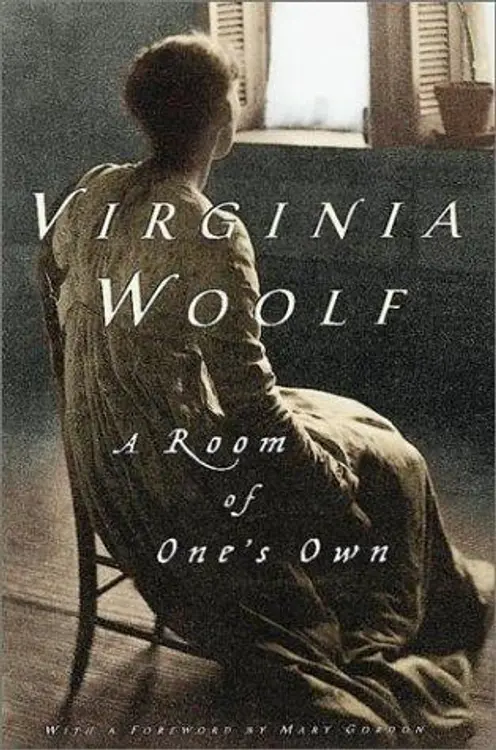
A room of one's own
Virginia Woolf ; foreword by Mary Gordon.

The diary of Virginia Woolf
edited by Anne Olivier Bell ; introd. by Quentin Bell.

A writer's diary: being extracts from the diary
of Virginia Woolf ; edited by Leonard Woolf
Reader Reviews
No reviews yet for this book.
Be the first to share your thoughts!