
Ojibwa Warrior
Dennis Banks And The Rise Of The American Indian Movement
Our rough guess is there are 90,500 words in this book.
At a pace averaging 250 words per minute, this book will take 6 hours and 2 minutes to read. With a half hour per day, this will take 12 days to read.
How long will it take you?
This book will take an estimated to read at a reading speed averaging words per minute. With 30 minutes per day, this will take to read.
Enter your reading speedYou can take one of our WPM reading speed tests to find your reading speed.
Create a free account to track your reading progress, build your reading list, and set reading goals.
Author
Publication
2005-03-22 - University of Oklahoma Press
Language
English
Word Count
90,500 words, Guess
Page Count
362 pages
Physical Format
Paperback
Identifiers
- Internet Archiveojibwawarriorden0000bank
- ISBN-139780806136912
- ISBN-10080613691X
- Library of Congress Control Number2003065024
- OCLC Control Number53059503
and 2 more
- Better World Books9780806136912
- Open LibraryOL7940100M
Classifications
- LCCE99.C6
- LCCE99.C6 B258 2004
Description
Publisher's description: Dennis Banks, an American Indian of the Ojibwa Tribe, is probably the most influential Indian leader of our time. In Ojibwa Warrior, written with acclaimed writer and photographer Richard Erdoes, Banks tells his own story for the very first time and reveals an inside look at the birth of the American Indian Movement. Born in 1937 and raised by his grandparents on the Leach Lake reservation in Minnesota, Dennis Banks grew up learning traditional Ojibwa lifeways. As a young child he was torn from his home and forced to attend a government boarding school designed to assimilate Indian children into white culture. After years of being "white man-ized" in these repressive schools, Banks enlisted in the U.S. Air Force, shipping out to Japan when he was only seventeen years old. After returning to the states, Banks lived in poverty in the Indian slums of Minnesota until he was arrested for stealing groceries to feed his growing family. Although his white accomplice was freed on probation, Banks was sent to prison. There he became determined to educate himself. Hearing about the African American struggle for civil rights, he recognized that American Indians must take up a similar fight. Upon his release, Banks became a founder of AIM, the American Indian Movement, which soon inspired Indians from many tribes to join the fight for American Indian rights. Through AIM, Banks sought to confront racism with activism rooted deeply in Native religion and culture. Ojibwa Warrior relates Dennis Banks₂s inspiring life story and the story of the rise of AIM--from the 1972 "Trail of Broken Treaties" march to Washington, D.C., which ended in the occupation of the Bureau of Indian Affairs building, to the 1973 standoff at Wounded Knee, when Lakota Indians and AIM activists from all over the country occupied the site of the infamous 1890 massacre of three hundred Sioux men, women, and children to protest the bloodshed and corruption at the Pine Ridge Lakota reservation. Banks tells the inside story of the seventy-one day siege, his unlikely nighttime escape and interstate flight, and his eventual shootout with authorities at an FBI roadblock in Oregon. Pursued and hunted, he managed to reach California. There, authorities refused to extradite him to South Dakota, where the attorney general had declared that the best thing to do with Dennis Banks was to "put a bullet through his head." Years later, after a change in state government, Banks gave himself up to South Dakota authorities. Sentenced to two years in prison, he was paroled after serving one year to teach students Indian history at the Lone Man school at Pine Ridge. Since then, Dennis Banks has organized "Sacred Runs" for young people, teaching American Indian ways, religion, and philosophy worldwide. Now operating a successful business on the reservation, he continues the fight for Indian rights. This account is enhanced by dramatic photographs, most taken by Richard Erdoes, of key people and events from the narrative.
First Sentence
May 8, 1973-Stand down at Wounded Knee.
Subjects
Topics
Places
People
Times
Similar Books
Civil Rights Movement: Revised Edition

Voices in Our Blood: America's Best on the Civil Rights Movement
Jon Meacham

Black Elk Speaks: The Complete Edition
Black Elk, John G. Neihardt
"I have a dream": the quotations of Martin Luther King Jr.
compiled and edited by Lotte Hoskins.

Alex Posey: Creek Poet, Journalist, and Humorist (American Indian Lives)
Daniel F. Littlefield

Ishi in two worlds: a biography of the last wild Indian in North America.
With a foreword by Lewis Gannett.
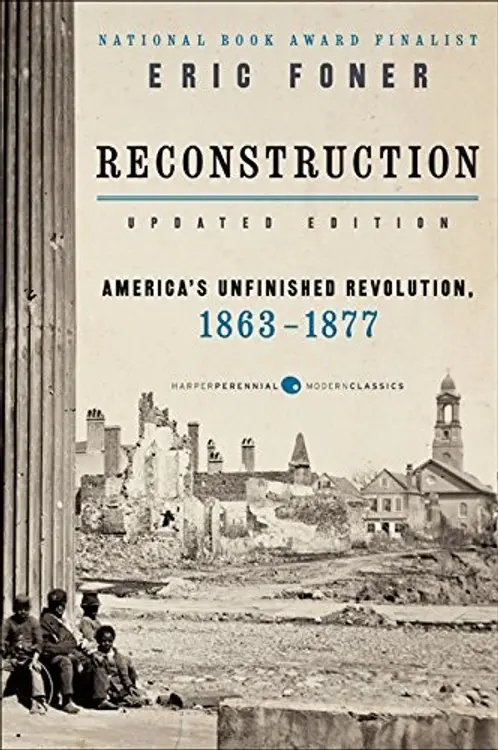
Reconstruction Updated Edition: America's Unfinished Revolution, 1863-1877
Eric Foner

Reconstruction: America's unfinished revolution, 1863-1877
Eric Foner.
Reader Reviews
No reviews yet for this book.
Be the first to share your thoughts!