
Reinventing marxism
Our rough guess is there are 91,500 words in this book.
At a pace averaging 250 words per minute, this book will take 6 hours and 6 minutes to read. With a half hour per day, this will take 12 days to read.
How long will it take you?
This book will take an estimated to read at a reading speed averaging words per minute. With 30 minutes per day, this will take to read.
Enter your reading speedYou can take one of our WPM reading speed tests to find your reading speed.
Create a free account to track your reading progress, build your reading list, and set reading goals.
We earn a commission on purchases
Author
Publication
1996 - Johns Hopkins University Press, Baltimore, Maryland
Language
English
Word Count
91,500 words, Guess
Page Count
366 pages
Identifiers
- Open LibraryOL1280120M
- ISBN-100801850762
- OCLC Control Number32204116
- OCLC Control Numberreinventingmarxi0000sher
- Library of Congress Control Number95011951
and 2 more
- Goodreads1364962
- LibraryThing275573
Classifications
- DDC335.4
- LCCHX73 .S499 1995
Description
The collapse of the Soviet Union provides economist Howard Sherman with the opportunity to re-evaluate Marxism as an alternative to conventional pro-capitalist perspectives. Arguing that Soviet Marxism distorted Marxian thought, Sherman acknowledges that Marxism must move beyond its traditional Soviet formulation. What is needed, he writes, is a new, critical Marxism that is integral to a radical political economy - a Marxism that sees society as an organic whole dependent upon an integrated set of relationships. Sherman applies his relational-historical approach to four problems: poverty and exploitation, unemployment, the state, and the history of the Soviet Union. Then, using the same approach, he explores several important subjects of classical Marxism - dialectics, materialism, determinism, and Marxian humanism. The result is an understanding of Marxism that is more open-ended, flexible, and nuanced than previous approaches had allowed. In the final part of the book Sherman reconstructs contemporary Marxism as a political economy, and uses it as a critique of such failed communist societies as the former Yugoslavia and Soviet Union. He also shows how Marxism can be a valuable tool for examining society, economics, and politics in the United States.
Subjects
Topics
Similar Books

The Communist Manifesto
Karl Marx, Friedrich Engels
45m read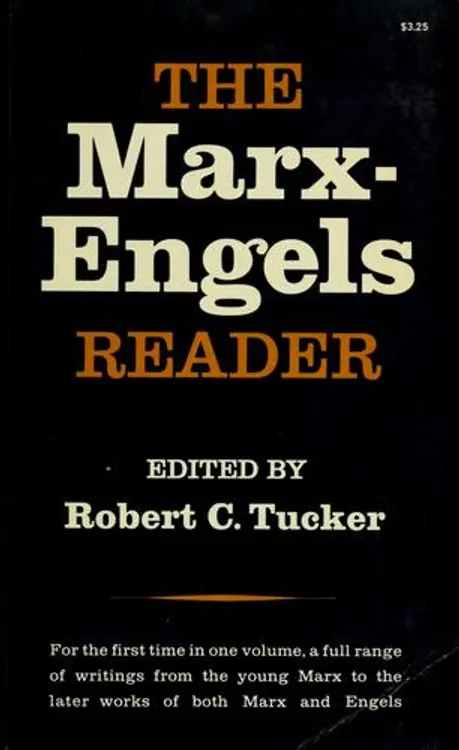
The Marx-Engels reader.
Edited by Robert C. Tucker.

Today's isms; communism, fascism, capitalism, socialism.
W. Ebenstein, William Ebenstein, William Ebenstein, Alan O. Ebenstein, Ebenstein & Fogelman, Alan Ebenstein, EBENSTEIN FOGE
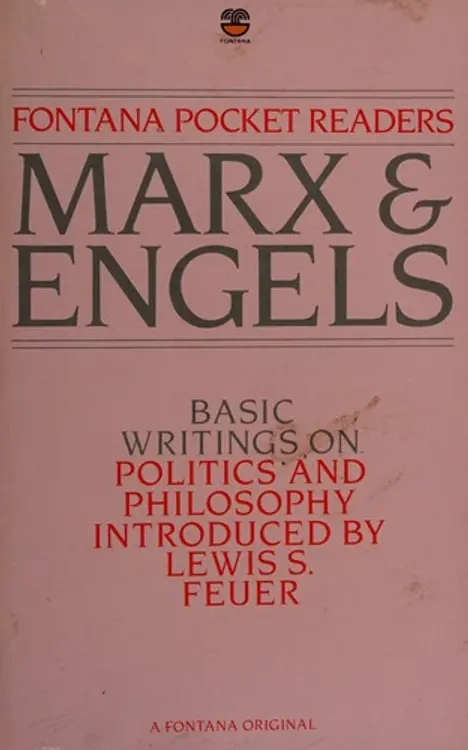
Basic writings on politics and philosophy
Karl Marx & Friedrich Engels ; edited with an introduction by Lewis S. Feuer.

Karl Marx, Frederick Engels: collected works
[translators, Richard Dixon and others].

Marxism and literary criticism
Terry Eagleton.
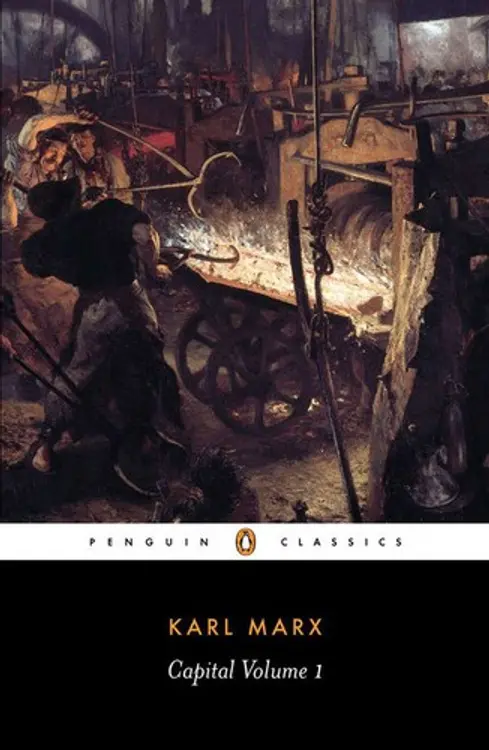
Capital: a critique of political economy
Karl Marx ; introduced by Ernest Mandel ; translated by Ben Fowkes.
Economic and philosophic manuscripts of 1844.
Karl Marx
Reader Reviews
No reviews yet for this book.
Be the first to share your thoughts!