
Lincoln and Emancipation
Our rough guess is there are 40,000 words in this book.
At a pace averaging 250 words per minute, this book will take 2 hours and 40 minutes to read. With a half hour per day, this will take 6 days to read.
How long will it take you?
This book will take an estimated to read at a reading speed averaging words per minute. With 30 minutes per day, this will take to read.
Enter your reading speedYou can take one of our WPM reading speed tests to find your reading speed.
Create a free account to track your reading progress, build your reading list, and set reading goals.
Author
Publication
2015-05-12 - Southern Illinois University Press
Language
English
Word Count
40,000 words, Guess
Page Count
160 pages
Physical Format
Hardcover
Identifiers
- ISBN-100809333635
- ISBN-139780809333639
- Library of Congress Control Number2014033618
- OCLC Control Number883647335
- Better World Books9780809333639
and 1 more
- Open LibraryOL27515975M
Classifications
- LCCE457.2 .M497 2015
- LCCE457.2.M497 2015
Description
"In this succinct study, Edna Greene Medford examines the ideas and events that shaped President Lincoln's responses to slavery, following the arc of his ideological development from the beginning of the Civil War, when he aimed to pursue a course of noninterference, to his championing of slavery's destruction before the conflict ended. Throughout, Medford juxtaposes the president's motivations for advocating freedom with the aspirations of African Americans themselves, restoring African Americans to the center of the story about the struggle for their own liberation. Lincoln and African Americans, Medford argues, approached emancipation differently, with the president moving slowly and cautiously in order to save the Union while the enslaved and their supporters pressed more urgently for an end to slavery. Despite the differences, an undeclared partnership existed between the president and slaves that led to both preservation of the Union and freedom for those in bondage.^ Medford chronicles Lincoln's transition from advocating gradual abolition to campaigning for immediate emancipation for the majority of the enslaved, a change effected by the military and by the efforts of African Americans. The author argues that many players--including the abolitionists and Radical Republicans, War Democrats, and Black men and women--participated in the drama through agitation, military support of the Union, and destruction of the institution from within. Medford also addresses differences in the interpretation of freedom: Lincoln and most Americans defined it as the destruction of slavery, but African Americans understood the term to involve equality and full inclusion into American society. An epilogue considers Lincoln's death, African American efforts to honor him, and the president's legacy at home and abroad.^ Both enslaved and free Black people, Medford demonstrates, were fervent participants in the emancipation effort, showing an eagerness to get on with the business of freedom long before the president or the North did. By including African American voices in the emancipation narrative, this insightful volume offers a fresh and welcome perspective on Lincoln's America"--
Subjects
Topics
Other Editions
- Lincoln and Emancipation
Similar Books
Lincoln Conspiracy: The Secret Plot to Kill America's 16th President--And Why It Failed
Brad Meltzer, Josh Mensch

Port Royal Experiment: A Case Study in Development
Kevin Dougherty
Twelve Years a Slave: Classic Literature
Solomon Northup, Solomon Northup
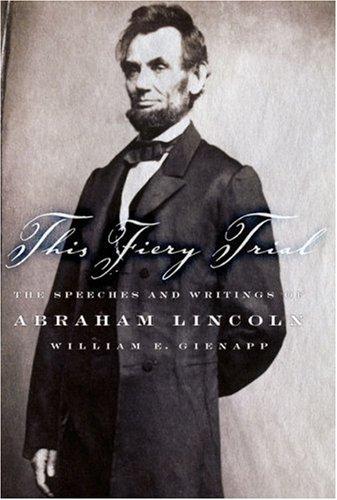
This fiery trial: the speeches and writings of Abraham Lincoln
edited by William E. Gienapp.
Abraham Lincoln and the Union: Large Print
Nathaniel Wright Stephenson

Abraham Lincoln, Slavery, and the Civil War: Selected Writings and Speeches (The Bedford Series in History and Culture)
Abraham Lincoln
Reader Reviews
No reviews yet for this book.
Be the first to share your thoughts!