
Hitler's willing executioners
ordinary Germans and the Holocaust
1st ed.
Our rough guess is there are 155,500 words in this book.
At a pace averaging 250 words per minute, this book will take 10 hours and 22 minutes to read. With a half hour per day, this will take 21 days to read.
How long will it take you?
This book will take an estimated to read at a reading speed averaging words per minute. With 30 minutes per day, this will take to read.
Enter your reading speedYou can take one of our WPM reading speed tests to find your reading speed.
Create a free account to track your reading progress, build your reading list, and set reading goals.
We earn a commission on purchases
Author
Publication
1996 - Alfred A. Knopf, New York, New York (State)
Language
English
Word Count
155,500 words, Guess
Page Count
622 pages
Identifiers
- Open LibraryOL23292738M
- ISBN-100679446958
- OCLC Control Number33103054
- OCLC Control Numberhitlerswillingex00gold
- Library of Congress Control Number95038591
and 3 more
- Goodreads833632
- LibraryThing13440
- WikidataQ123009596
Classifications
- LCCD804.3 .G648 1996
- DDC940.53/18
Description
This groundbreaking international bestseller lays to rest many myths about the Holocaust: that Germans were ignorant of the mass destruction of Jews, that the killers were all SS men, and that those who slaughtered Jews did so reluctantly. Hitler's Willing Executioners provides conclusive evidence that the extermination of European Jewry engaged the energies and enthusiasm of tens of thousands of ordinary Germans. Goldhagen reconstructs the climate of "eliminationist anti-Semitism" that made Hitler's pursuit of his genocidal goals possible and the radical persecution of the Jews during the 1930s popular. Drawing on a wealth of unused archival materials, principally the testimony of the killers themselves, Goldhagen takes us into the killing fields where Germans voluntarily hunted Jews like animals, tortured them wantonly, and then posed cheerfully for snapshots with their victims. From mobile killing units, to the camps, to the death marches, Goldhagen shows how ordinary Germans, nurtured in a society where Jews were seen as unalterable evil and dangerous, willingly followed their beliefs to their logical conclusion. - Publisher.
First Sentence
IN THINKING ABOUT German antisemitism, people have a tendency to make important, unacknowledged assumptions about Germans before and during the Nazi period that bear scrutiny and revision.
Description
"Daniel Jonah Goldhagen has revisited a question that history has come to treat as settled, and his researchers have led him to the inescapable conclusion that none of the established answers holds true. That question is: "How could the Holocaust happen?" His own response is a new exploration of those who carried out the Holocaust and of German society and its ingrained anti-semitism - and it demands a fundamental revision of our thinking about the years 1933-1945." "Drawing principally on materials either unexplored or neglected by previous scholars, Goldhagen marshals new, disquieting, primary evidence - including extensive testimony from the actual perpetrators themselves - to show that many beliefs about the killers are fallacies: They were not primarily SS men or Nazi Party members, but perfectly ordinary Germans from all walks of life, men (and women) who brutalized and murdered Jews both willingly and zealously. And they did so, moreover, not because they were coerced (for, as he shows irrefutably, so many were informed by their own commanders that they could refuse to kill without fear of retribution)...not because they slavishly followed orders (a view seemingly supported by Stanley Milgram's famous Yale "obedience experiment")...not because of any tremendous social, psychological, or peer pressure to conform to the behaviour of their comrades (for no such evidence exists)...and not for any reasons associated with Hannah Arendt's disputed notion of the "banality of evil." They acted as they did because of a widespread, profound, unquestioned, and virulent antisemitism that led them to regard the Jews as a demonic enemy whose extermination was not only necessary but also just. Again and again, it is the killers' own words that give us a portrait, both shocking and immediate, of their world: the organization of their daily lives, how they did what they did, their reactions to it, even their recreations in the killings fields, which included everything from sports and entertainment to the hobby of taking snapshots of their deeds and victims - to be freely exchanged and collected among themselves - leaving a devastating record of self-indictment that the author reproduces here." "All of Goldhagen's documentary evidence is set within a fresh analysis of the phenomenon of German antisemitism itself, which revises many conventional views. He shows that it was already deep-rooted and pervasive in German society before Hitler came to power, and that there was a widely shared view that the Jews ought to be eliminated in some way from German society. When Hitler, ultimately, chose mass extermination as the only "final solution," he was thus easily able to enlist vast numbers of Germans to carry it out."--BOOK JACKET.
Subjects
Topics
Other Editions
- Hitler's willing executioners: ordinary Germans and the Holocaust
Show 2 more editions
Similar Books

Ordinary men: Reserve Police Battalion 101 and the final solution in Poland
Christopher R. Browning
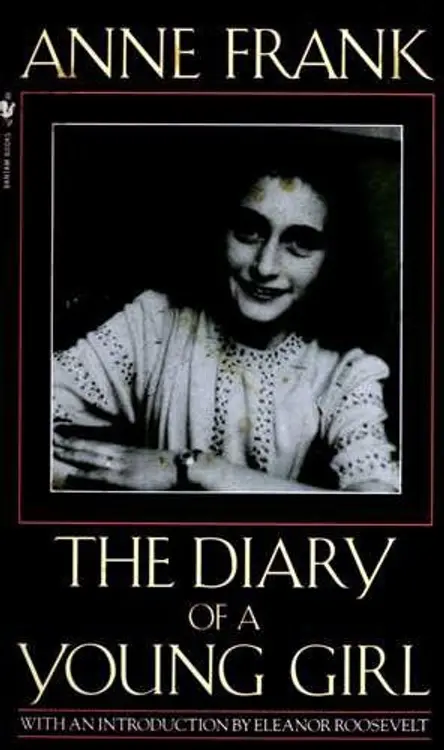
The Diary of a Young Girl
Anne Frank ; translated from the Dutch by B.M. Mooyaart-Doubleday ; with an introduction by Eleanor Roosevelt.
6h 8m read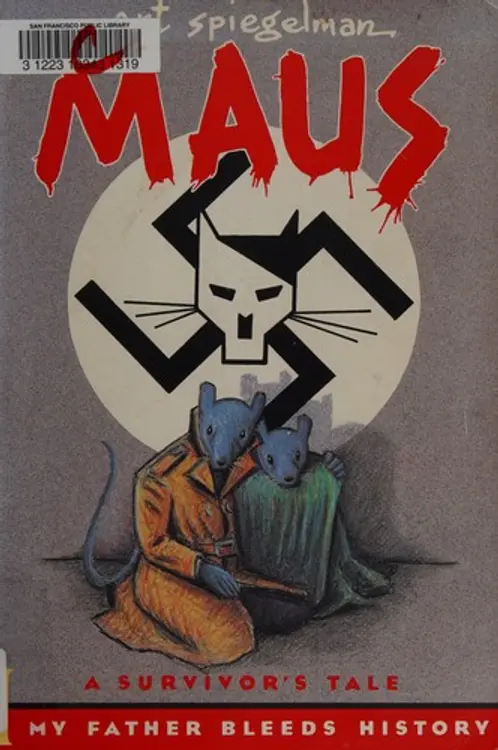
Maus I: a survivor's tale : my father bleeds history
Art Spiegelman.
El nazi y el psiquiatra: Hermann Göring y Douglas M. Kelley : un encuentro letal de mentes al fin de la Segunda Guerra Mundial
Jack El-Hai ; [traducción, Alejandra Ramos Aragón]

Maus II And Here My Troubles Began
Art Spiegelman. 2, And here my troubles began.

The Pianist: The Extraordinary Story of One Man's Survival in Warsaw, 1939-45
Władysław Szpilman, Anthea Bell, Wilm Hosenfeld
The abandonment of the Jews: America and the Holocaust, 1941-1945
David S. Wyman.

Eichmann in Jerusalem: a report on the banality of evil
Hannah Arendt ; introduction by Amos Elon.
Reader Reviews
No reviews yet for this book.
Be the first to share your thoughts!