
The German catastrophe
Reflections and recollections (Beacon paperback)
Our rough guess is there are 30,250 words in this book.
At a pace averaging 250 words per minute, this book will take 2 hours and 1 minutes to read. With a half hour per day, this will take 4 days to read.
How long will it take you?
This book will take an estimated to read at a reading speed averaging words per minute. With 30 minutes per day, this will take to read.
Enter your reading speedYou can take one of our WPM reading speed tests to find your reading speed.
Create a free account to track your reading progress, build your reading list, and set reading goals.
Author
Publication
1963 - Beacon Press, Boston
Language
English
Translation of: Die deutsche Katastrophe
Word Count
30,250 words, Guess
Page Count
121 pages
Physical Format
Paperback
Identifiers
- Open LibraryOL7944906M
- ISBN-139780807056677
- ISBN-100807056677
- OCLC Control Number405257
- OCLC Control Numbergermancatastroph0000mein
and 2 more
- Goodreads3363280
- LibraryThing392772
Classifications
- LCCDD256.5
Description
Volume 5. Wilhelmine Germany and the First World War (1890-1918) Friedrich Meinecke, The German Catastrophe: Reflections and Recollections (1946) Here, the historian Friedrich Meinecke (1862-1964) reflects on the “Spirit of 1914,” a transient sense of unity felt by Germans during the initial stages of the First World War. Free from romantic notions of national solidarity, Meinecke also addresses the fissures in German society that reasserted themselves several months after the war began. III. THE GERMAN PEOPLE DURING THE FIRST WORLD WAR When the First World War broke out, it seemed once more that a kind angel might lead the German people back to the right path. The exaltation of spirit experienced during the August days of 1914, in spite of its ephemeral character, is one of the more precious, unforgettable memories of the highest sort. All the rifts which had hitherto existed in the German people, both within the bourgeoisie and between the bourgeoisie and the working classes, were suddenly closed in the face of the common danger which snatched us out of the security of the material prosperity that we had been enjoying. And more than that, one perceived in all camps that it was not a matter merely of the unity of a gain-seeking partnership, but that an inner renovation of our whole state and culture was needed. We generally believed indeed that this had already commenced and that it would progress further in the common experiences of the war, which was looked upon as a war of defense and self-protection. We underwent a rare disappointment in our hopes. Within a year the unity was shattered and the German people were again separated upon various paths. Was the uplift of August 1914 after all merely the last flickering of older evolutionary forces which were now coming to an end? A good observer, Max Hildebert Böhm, suspected as much in 1917. He wrote in the Preussische Jahrbücher (volume 167): “In many respects August 1914 will perhaps at a later time look much less like the commencement of a new era than the rather painful farewell to an old one, the splendid final harmonious note of a romanticism from which the German mind could tear itself away only with profound resignation.” The new era that is now really approaching, he continued, will be characterized by techniques, rationalism, bread-rationing socialism, by a pitiless ethos guided not by the heart but by the head. A state whose essence is organization will be indifferent, with the innermost distrust, toward the incalculable unfolding of life of the individual, from which alone German culture buds forth.” These words like a searchlight throw their beam both backward and forward. We stand at the main turning-point in the evolution of the German people. The man of Goethe’s day was a man of free individuality. He was at the same time a “humane” man, who recognized his duty toward the community to be “noble, helpful, and good” and carried out his duty accordingly. He lived and developed at first in the synthesis of classical liberalism and then of the national socialism of the Naumann stamp. He became ever more strongly bound up with the social needs of the masses and with the political requirements of the state; that is, he became ever more tightly and 1 concretely united with the community of people and state that enveloped him. Once more something of this old free relationship between the individual and the state glowed in the romanticism of the August days. Was the “humane” man, who then once again bore testimony to himself, henceforth to be condemned to extinction by all the forces which were compressing men more and more in masses? We shall keep this difficult question in mind; the answer to it can be found, so far as is possible at all, at the end. As early as 1915 one could perceive that the August synthesis of cultural and social forces would not last. It crumbled away simultaneously from both the right and the left. The efforts of the extreme left, associated with the name of the younger Liebknecht, belong to the history of communism in Germany. Communism was developing and would become of historical significance if Germans of the future should take their stamp from it. The developments on the German right wing which must now occupy us were not yet, however, touched by communism. The conflict about war aims broke out at this point. For Germany’s future the important thing to be done now was for Germany to extricate herself from the mortally dangerous position into which she had fallen through her thoughtless prewar policy. She made enemies simultaneously of the two great world powers, Russia and England. [ . . . ] Source: Friedrich Meinecke, The German Catastrophe: Reflections and Recollections (1946). Translated by Sidney B. Fay. Cambridge, MA: Harvard University Press, 1950, pp. 25-27.
Subjects
Other Editions
- The German catastrophe: Reflections and recollections (Beacon paperback)
Similar Books

Hitler: A Study in Tyranny
by Alan Bullock.
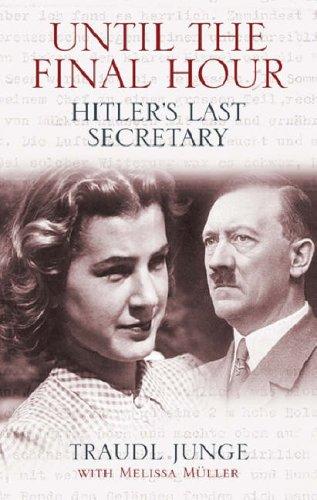
Until the final hour: Hitler's last secretary
Traudl Junge ; edited by Melissa Müller ; translated from the German by Anthea Bell.
Rise and Fall of the Third Reich: A History of Nazi Germany
William L. Shirer, William L. Shirer
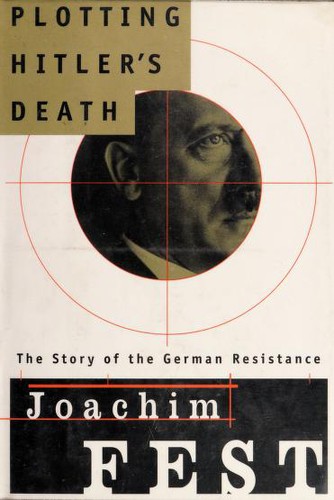
Plotting Hitler's death: the story of the German resistance
Joachim Fest ; translated by Bruce Little.

Hitler: the Führer and the people
J.P. Stern.

Hitler: the policies of seduction
Rainer Zitelmann ; translated by Helmut Bogler.

Mein Kampf
Adolf Hitler
18h 32m read
In Hitler's Germany: daily life in the Third Reich
Bernt Engelmann ; translated from the German by Krishna Winston.
Reader Reviews
No reviews yet for this book.
Be the first to share your thoughts!