
Frontiers of the Roman Empire
a social and economic study
Our rough guess is there are 85,250 words in this book.
At a pace averaging 250 words per minute, this book will take 5 hours and 41 minutes to read. With a half hour per day, this will take 12 days to read.
How long will it take you?
This book will take an estimated to read at a reading speed averaging words per minute. With 30 minutes per day, this will take to read.
Enter your reading speedYou can take one of our WPM reading speed tests to find your reading speed.
Create a free account to track your reading progress, build your reading list, and set reading goals.
We earn a commission on purchases
Author
Publication
1994 - Johns Hopkins University Press, Baltimore, Maryland
Language
English
Word Count
85,250 words, Guess
Page Count
341 pages
Identifiers
- Open LibraryOL1421175M
- ISBN-100801846773
- OCLC Control Number28632172
- OCLC Control Numberfrontiersofroman0000whit
- Library of Congress Control Number93031342
and 2 more
- Goodreads4566567
- LibraryThing20770
Classifications
- DDC937/.06
- LCCDG59.A2 W5513 1994
Description
Although the Roman empire was one of the longest lasting in history, it was never ideologically conceived by its rulers or inhabitants as a territory within fixed limits. Yet the Roman armies clearly reached certain points - which today we call frontiers - where they simply stopped advancing and annexing new territories. In Frontiers of the Roman Empire C.R. Whittaker examines the Roman frontiers in terms of what they meant to the Romans and in their military, economic, and social function. Whittaker begins by discussing the Romans' ideological vision of geographic space - demonstrating, for example, how an interest in precise boundaries of organized territories never included a desire to set limits on controls of unorganized space beyond these territories. He then describes the role of frontiers in the expanding empire, including an attempt to answer the question of why the frontiers stopped where they did. He examines the economy and society of the frontiers. Finally, he discusses the pressure hostile outsiders placed on the frontiers, and their eventual collapse. Observing that frontiers are rarely, if ever, static, Whittaker concludes that the very success of the Roman frontiers as permeable border zones sowed the seeds of their eventual destruction. As the frontiers of the late empire ceased to function, the ideological distinctions between Romans and barbarians became blurred. Yet the very permeability of the frontiers, Whittaker contends, also permitted a transformation of Roman society, breathing new life into the empire rather than causing its complete extinction. "Although the Roman empire was one of the longest lasting in history, it was never ideologically conceived by its rulers or inhabitants as a territory within fixed limits. Yet the Roman armies clearly reached certain points - which today we call frontiers - where they simply stopped advancing and annexing new territories. In Frontiers of the Roman Empire C. R. Whittaker examines the Roman frontiers in terms of what they meant to the Romans and in their military, economic, and social function." "Whittaker begins by discussing the Romans' ideological vision of geographic space - demonstrating, for example, how an interest in precise boundaries of organized territories never included a desire to set limits on controls of unorganized space beyond these territories. He then describes the role of frontiers in the expanding empire, including an attempt to answer the question of why the frontiers stopped where they did. He examines the economy and society of the frontiers. Finally, he discusses the pressure hostile outsiders placed on the frontiers, and their eventual collapse." "Observing that frontiers are rarely, if ever, static, Whittaker concludes that the very success of the Roman frontiers as permeable border zones sowed the seeds of their eventual destruction. As the frontiers of the late empire ceased to function, the ideological distinctions between Romans and barbarians became blurred. Yet the very permeability of the frontiers, Whittaker contends, also permitted a transformation of Roman society, breathing new life into the empire rather than causing its complete extinction."--BOOK JACKET.
Subjects
Topics
Places
Series Statement
- Ancient society and history
Other Editions
- Frontiers of the Roman Empire: a social and economic study
Similar Books
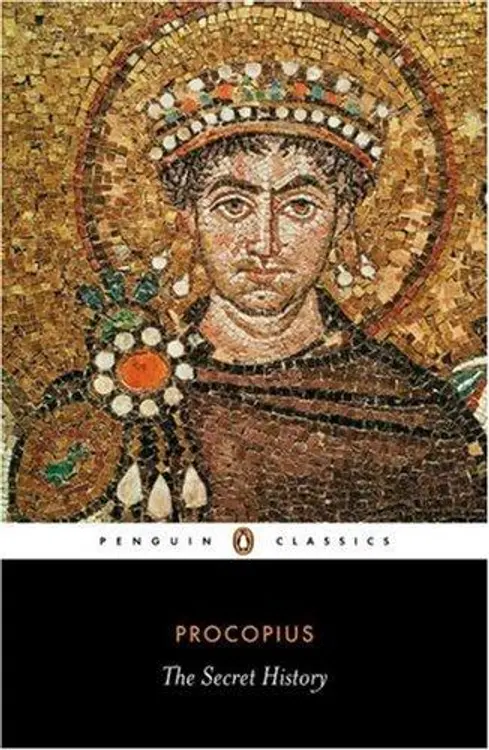
The Secret History (Penguin Classics)
Procopius, Richard Atwater

Rubicon: The Triumph and Tragedy of the Roman Republic
Tom Holland
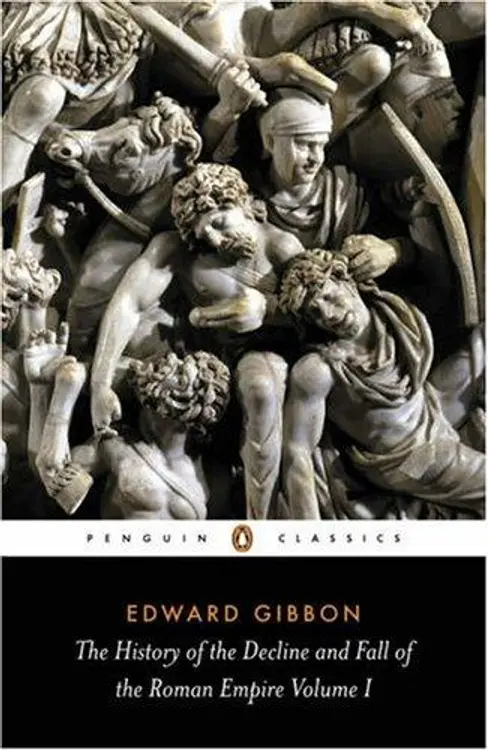
The History of the Decline and Fall of the Roman Empire: Volume 1 (Penguin Classics)
Edward Gibbon, David P. Womersley
A History of Rome
M. (Max) Cary, M. Cary, H.H. Scullard

Libri Qui Supersunt, tom. I: Ab Excessu Divi Augusti (Annales) (Bibliotheca scriptorum Graecorum et Romanorum Teubneriana)
P. Cornelius Tacitus

Julius Caesar: The Life Of A Roman General (Graphic Nonfiction)
Gary Jeffrey, Kate Petty
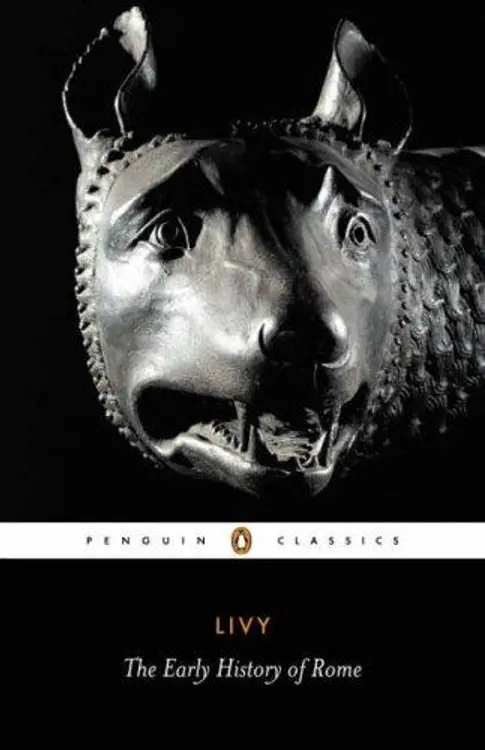
Livy: The Early History of Rome, Books I-V (Penguin Classics)
Livy.

Plutarch's Lives
with an English translation by Bernadotte Perrin.
Reader Reviews
No reviews yet for this book.
Be the first to share your thoughts!