
Marius
The Epicurean His Sensations and Ideas
Our rough guess is there are 56,000 words in this book.
At a pace averaging 250 words per minute, this book will take 3 hours and 44 minutes to read. With a half hour per day, this will take 8 days to read.
How long will it take you?
This book will take an estimated to read at a reading speed averaging words per minute. With 30 minutes per day, this will take to read.
Enter your reading speedYou can take one of our WPM reading speed tests to find your reading speed.
Create a free account to track your reading progress, build your reading list, and set reading goals.
Word Count
56,000 words, Guess
Page Count
224 pages
Physical Format
Paperback
Identifiers
- ISBN-100948166029
- ISBN-139780948166020
- LibraryThing97533
- Library of Congress Control Numbergb85021761
- OCLC Control Number12521024
and 2 more
- Better World Books9780948166020
- Open LibraryOL8474019M
Classifications
- LCCPR5134.M3
- DDC824.8
Description
<p>Marius is born in the second-century Roman Empire to a patrician family. In his youth he takes in the rituals, religion, and surroundings of his native land, and when his parents die, he’s sent away to a boarding school.</p> <p>As young Marius develops into manhood, he explores various schools of philosophy and ways of life, until he lands into the position of amanuensis to the emperor <a href="https://standardebooks.org/ebooks/marcus-aurelius">Marcus Aurelius</a>—who of course is not just the head of the largest empire the world had yet seen, but also a respected thinker and philosopher of Stoicism. Marius dips into Stoicism himself, until a fledgling new religion catches his attention: Christianity.</p> <p>Marius’s search for meaning gives <a href="https://standardebooks.org/ebooks/walter-pater">Pater</a> a broad canvas on which to expound on some of the central theses he would return to often in his career: how childhood experiences are essential to the personality of the adult, and how a carefully-curated, aesthetic life—but not one of pure hedonic abandon—is one of the most satisfying ways to live. Indeed, Pater is careful to distinguish Epicureanism and its emphasis on modest sensory pleasures and limiting desire, from hedonism and the ruin a life of pure consumption can bring.</p> <p>Despite this focus on philosophical searching, Pater also puts the conflict Marius feels over religion at the story’s forefront. Like Pater himself, who yearned for the simpler atmosphere of religion he had experienced in youth, Marius finds himself bouncing from paganism, to philosophy, to the new religion of Christianity, in search of the comfort of the lost rituals of his youth. In the end, a satisfactory peace seems elusive.</p> <p><i>Marius the Epicurean</i> remains an important milestone in 19th century investigations of religion and philosophy, while also being a rich example of a text brought alive with allusion and experiments in form. The story isn’t a straightforward narrative, but rather features frame narratives, epistolary fragments, orations, and dialogues. This structure looks forward to the modernism that would emerge in 20th century literature. Literary critic Harold Bloom called it “one of the more remarkable fictional experiments of the late nineteenth century.”</p>
Subjects
Topics
Places
People
Other Editions
- Marius: The Epicurean His Sensations and Ideas
Show 56 more editions
46 other editions not shown
Similar Books
Marius the Epicurean.: Introd. by Osbert Burdett.
Walter Pater

A Voice in the Wind: Mark of the Lion #1 (Mark of the Lion)
Francine Rivers

Quo vadis: a narrative of the time of Nero
Henryk Sienkiewicz.

Classical whodunnits: murder and mystery from ancient Greece and Rome
edited by Mike Ashley.

The satyricon
Petronius ; translated with an introduction and notes by P.G. Walsh.
3h 58m readBen-Hur: a tale of the Christ
by Lew Wallace
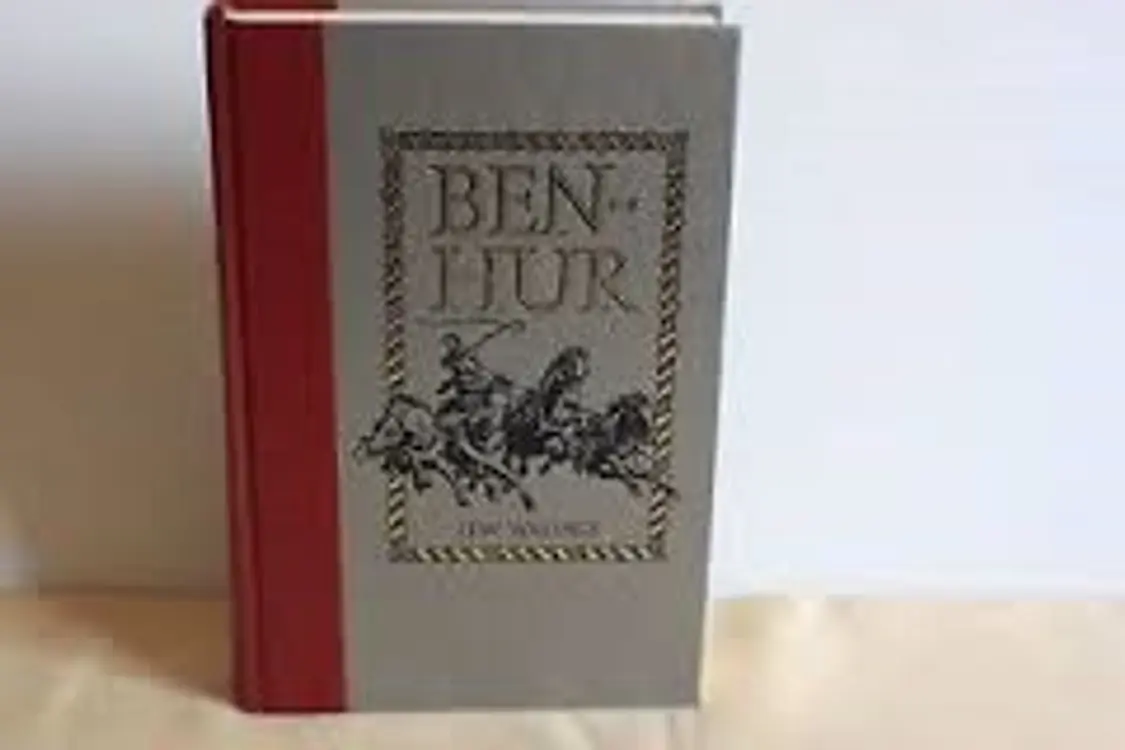
Ben-Hur: a tale of the Christ
Lew Wallace ; illustrations by Warren Chang ; decorations by William M. Johnson ; afterword by Robert and Katharine Morsberger.

The robe
Lloyd C. Douglas ; illustrations by Barron Storey ; afterword by Andrew M. Greeley.
Reader Reviews
No reviews yet for this book.
Be the first to share your thoughts!