
Effluent America
Cities, Industry, Energy, and the Environment (Pittsburgh Hist Urban Environ)
1 edition
Our rough guess is there are 86,000 words in this book.
At a pace averaging 250 words per minute, this book will take 5 hours and 44 minutes to read. With a half hour per day, this will take 12 days to read.
How long will it take you?
This book will take an estimated to read at a reading speed averaging words per minute. With 30 minutes per day, this will take to read.
Enter your reading speedYou can take one of our WPM reading speed tests to find your reading speed.
Create a free account to track your reading progress, build your reading list, and set reading goals.
Word Count
86,000 words, Guess
Page Count
344 pages
Physical Format
Paperback
Identifiers
- Internet Archiveeffluentamericac0000melo
- ISBN-100822957663
- ISBN-139780822957669
- LibraryThing947221
- Goodreads1238944
and 4 more
- Library of Congress Control Number2001002660
- OCLC Control Number46976768
- Better World Books9780822957669
- Open LibraryOL8117411M
Classifications
- LCCHT123 .M388 2001
- LCCHT123.M388 2001
Description
What's the difference between an anthill and a city? Protection from weather and predators, living and working quarters, transportation networks, food storage capability - all these they hold in common. And while there are obvious differences between humans and ants, both exist in the same space and time dimension - in nature. This simple idea, imagining cities as part of the larger physical world, has driven the work of the historian Martin Melosi for twenty-five years. Melosi is one of a handful of scholars who examine urban history from an ecological perspective, using the city to help define the place of nature in human life. Cities, he maintains, are places where humans live, work, play, consume goods, and make waste - just as humans have in caves, on farms, and in villages. To imagine the city as outside of nature limits what can be known about our past, and our future.^ Effluent America is a collection of essays spanning this innovative scholar's career and the growing field of urban environmental history. Garbage, wastewater, hazardous waste: these are the lenses through which Melosi views nineteenth- and twentieth-century America. In broad overviews and specific case studies, Effluent America treats the relationship between industrial expansion and urban growth from an ecological perspective. He charts the development of city services, the rationale for their implementation, and how they affected growth. He explores the environmental impacts of unprecedented methods of production, the influence of new forms of energy, and changing patterns of consumption during the Industrial Revolution and beyond. In so doing, he traces how one of the richest nations in the world became also the most wasteful, a juxtaposition of affluence and effluence.^ Other essays consider the important role of American cities in the history of the conservation and environmental movements. Melosi sketches the reforms and reformers, born out of such urban "quality of life" issues as pollution, sanitation, public health, and the need for greenspace. He also profiles the environmental justice movement, whose response to environmental problems is a question - Who bears the most risk? Urban environmental history is a window on the past, but it also directly informs issues of the present: public health, pollution, the role of government in delivering services, etc. Effluent America is an important volume for students of history and urban affairs, as well as for policymakers and all those concerned about the one world we inhabit.
Subjects
Topics
Other Editions
- Effluent America
Similar Books

Imagining the Modern City
James Donaldson

The city
Robert E. Park, Ernest W. Burgess, Roderick D. McKenzie ; with an introduction by Morris Janowitz
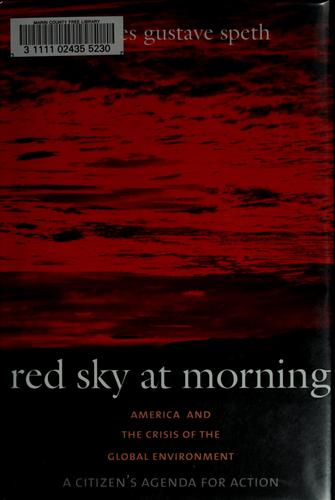
Red sky at morning: America and the crisis of the global environment
James Gustave Speth.

Middletown: a study in contemporary American culture
by Robert S. Lynd and Helen Merrell Lynd; foreword by Clark Wissler.

Sounding Spokane:: Perspectives on the Built Environment of a Regional City
David Wang

Cities and Society (Blackwell Readers in Sociology)
Nancy Kleniewski
Livelihoods at the Margins: Surviving the City
James Staples
Reader Reviews
No reviews yet for this book.
Be the first to share your thoughts!