
1912
Wilson, Roosevelt, Taft & Debs--The Election that Changed the Country
Our rough guess is there are 80,750 words in this book.
At a pace averaging 250 words per minute, this book will take 5 hours and 23 minutes to read. With a half hour per day, this will take 11 days to read.
How long will it take you?
This book will take an estimated to read at a reading speed averaging words per minute. With 30 minutes per day, this will take to read.
Enter your reading speedYou can take one of our WPM reading speed tests to find your reading speed.
Create a free account to track your reading progress, build your reading list, and set reading goals.
Word Count
80,750 words, Guess
Page Count
323 pages
Physical Format
Hardcover
Identifiers
- Internet Archive1912wilsonroosev00chac
- ISBN-100743203941
- ISBN-139780743203944
- LibraryThing213316
- Goodreads403440
and 2 more
- Library of Congress Control Number2004041660
- Open LibraryOL23272177M
Classifications
- DDC324.973/0912
- LCCE765 .C47 2004
Description
Presidential politics in one crucial year of the Progressive Era—before TV, polls, and consultants: not a horse race so much as a contact sport. Veteran journalist and editor Chace (Govt. and International Affairs/Bard Coll.; Acheson: The Secretary of State Who Created the American World, 1998, etc.) does not present a fresh interpretation of the 1912 election, but he offers a lively recounting of this pivotal, bitter contest that hinged on how to overcome economic inequality and featured significant third-party involvement. The rivals included conservative Republican President William Howard Taft; his predecessor, Theodore Roosevelt, who broke with his old friend over conservation and trust-busting issues, then bolted the GOP to form the Progressive Party; New Jersey governor Woodrow Wilson, whose brilliant oratory called for more stringent antitrust legislation; and fiery socialist Eugene Debs, who preached trade unionism to audiences as large as 100,000. Chace captures the way that rivals’ egos could shade into substantive quarrels over the use of presidential power. He conveys a pre–photo-op era of candidates’ barnstorming coast to coast by train with messianic zeal, with Roosevelt even delivering one speech after being wounded by a would-be assassin. The nation depicted here seems more divided than the ballyhooed “red” and “blue” America of 2000. Debs took six percent of the vote—the highest proportion ever given to a Socialist candidate. TR split the GOP vote with Taft, helping to usher in the eight-year Wilson administration. With perfectly chosen anecdotes, Chace moves nimbly among the candidates, their advisers, and diehard supporters (at a Michigan GOP meeting, a Taft supporter threw a body block at a Roosevelt speaker). At the same time, he underscores the race’s larger, often enduring, issues (far ahead of their time, the Progressive platform called for limits on campaign spending). Twenty years later, the New Deal incorporated elements of Roosevelt’s “New Nationalism” with Wilson’s “New Freedom” programs. Yet another consequence of the race was more fateful, Chace notes: TR’s loss meant that for the next century, the GOP would be riven between “reform and reaction.” Entertaining, insightful history about a defining moment in 20th-century politics.
First Sentence
AN ASTOUNDING AND dreadfully poignant letter from his successor, William Howard Taft, awaited Theodore Roosevelt a few days before he was to board an ocean liner for his return to America.
Subjects
Topics
Places
People
Other Editions
- 1912: Wilson, Roosevelt, Taft & Debs--The Election that Changed the Country
Similar Books
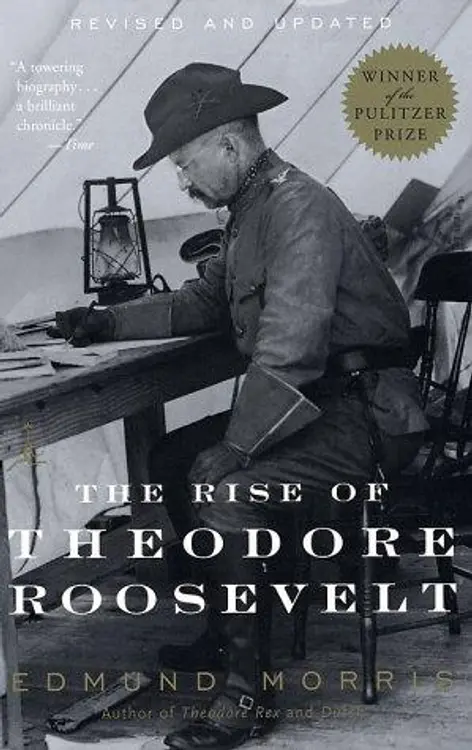
The rise of Theodore Roosevelt
Edmund Morris.

The Bully Pulpit
Doris Kearns Goodwin
The autobiography of Theodore Roosevelt: condensed from the original edition, supplemented by letters, speeches, and other writings, and edited with an introduction
by Wayne Andrews.

The life and times of Theodore Roosevelt
William H. Harbaugh.

Theodore Roosevelt and the rise of America to world power
Howard K. Beale.

Woodrow Wilson: revolution, war, and peace
Arthur S. Link.
When the cheering stopped: the last years of Woodrow Wilson
Gene Smith ; with an introduction by Allan Nevins.

The peace negotiations: a personal narrative
by Robert Lansing.
Reader Reviews
No reviews yet for this book.
Be the first to share your thoughts!