
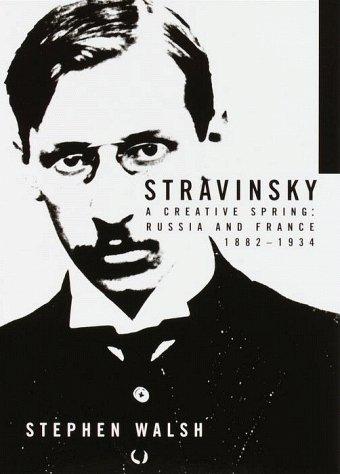
Stravinsky
Our rough guess is there are 63,250 words in this book.
At a pace averaging 250 words per minute, this book will take 4 hours and 13 minutes to read. With a half hour per day, this will take 9 days to read.
How long will it take you?
This book will take an estimated to read at a reading speed averaging words per minute. With 30 minutes per day, this will take to read.
Enter your reading speedYou can take one of our WPM reading speed tests to find your reading speed.
Create a free account to track your reading progress, build your reading list, and set reading goals.
We earn a commission on purchases
Word Count
63,250 words, Guess
Page Count
253 pages
Identifiers
- Open LibraryOL20513439M
- ISBN-100460860631
- OCLC Control Number27810335
- Library of Congress Control Numbergb93012611
- LibraryThing2029118
and 1 more
- Goodreads6351778
Classifications
- DDC780/.92
- LCCML410.S932 G76 1992
- DDCB
Description
As the twentieth century draws to a close, Igor Stravinsky's stature as one of its master musicians is indisputable. His active career as a composer covered fully two-thirds of the century, from the songs and the symphony he wrote as a pupil of Rimsky-Korsakov in St. Petersburg to the music on sacred themes he produced as an old man in Los Angeles. Between these early and late works stretched a creative life that included triumphs of the Ballets Russes such as The Firebird, Petrushka, and The Rite of Spring; children's piano pieces; works based on Greek myth and on Russian peasant theatre; new approaches to concerto grosso form as well as to ragtime; liturgies as well as sketches for circus band; reworkings of ideas from the Baroque, and explorations of possibilities no one had dreamed of. Stravinsky's influence is incalculable and, like his output, extraordinarily wide in range. It has been felt by composers from Debussy and Schoenberg to those who had not yet been heard from when he died in 1971. In his long and honored life he came into contact with people from Tchaikovsky and Ravel to T. S. Eliot and W. H. Auden, from Benito Mussolini to John F. Kennedy, from Picasso, Nijinsky, and Cocteau to Louis B. Mayer. In this new study, Paul Griffiths surveys Stravinsky's vastly variegated life and output in one chronological sweep, showing how certain basic images and principles emerge again and again in the music, but also emphasizing his capacity to start afresh, to confront us not with one Stravinsky but with many. Since Stravinsky's death, publication of his correspondence and other material has made possible a deeper investigation of his creative methods. Profiting from this, and exploring the works both as individual creations and as elements in a wider context, Paul Griffiths's book is a new and stimulating guide to Stravinsky's life and music.
Subjects
Series Statement
- Master musicians series
Other Editions
- Stravinsky
Similar Books
Reader Reviews
No reviews yet for this book.
Be the first to share your thoughts!