
Dubliners
Penguin Books USA edition (1)
We couldn't estimate the reading time for this book.
Author
Contributions
- Terence Brown - Introduction
Publication
1993 - Penguin Books, New York, USA
Language
English
Word Count
0 words, Guess
Page Count
0 pages
Physical Format
Paperback
Identifiers
- Internet Archivedubliners0000joyc_l1o1
- Internet Archivedubliners00joyc_4
- ISBN-100140186476
- ISBN-139780140186475
- Goodreads43546816
and 4 more
- Library of Congress Control Number93006730
- OCLC Control Number796955176
- Better World Books9780140186475
- Open LibraryOL26649258M
Classifications
- LCCPR6019.0908
- LCCPR6019.O9 D8 1993b
Description
James Joyce's disillusion with the publication of Dubliners in 1914 was the result of ten years battling with publishers, resisting their demands to remove swear words, real place names and much else, including two entire stories. Although only 24 when he signed his first publishing contract for the book, Joyce already knew its worth: to alter it in any way would 'retard the course of civilisation in Ireland'. Joyce's aim was to tell the truth -- to create a work of art that would reflect life in Ireland at the turn of the last century. By rejecting euphemism, he would reveal to the Irish the unromantic reality, the recognition of which would lead to the spiritual liberation of the country. Each of the fifteen stories offers a glimpse of the lives of ordinary Dubliners -- a death, an encounter, an opportunity not taken, a memory rekindled -- and collectively they paint a portrait of a nation. - Back cover. Dubliners is a collection of vignettes of Dublin life at the end of the 19th Century written, by Joyce’s own admission, in a manner that captures some of the unhappiest moments of life. Some of the dominant themes include lost innocence, missed opportunities and an inability to escape one’s circumstances. Joyce’s intention in writing Dubliners, in his own words, was to write a chapter of the moral history of his country, and he chose Dublin for the scene because that city seemed to him to be the centre of paralysis. He tried to present the stories under four different aspects: childhood, adolescence, maturity and public life. ‘The Sisters’, ‘An Encounter’ and ‘Araby’ are stories from childhood. ‘Eveline’, ‘After the Race’, ‘Two Gallants’ and ‘The Boarding House’ are stories from adolescence. ‘A Little Cloud’, ‘Counterparts’, ‘Clay’ and ‘A Painful Case’ are all stories concerned with mature life. Stories from public life are ‘Ivy Day in the Committee Room’ and ‘A Mother and Grace’. ‘The Dead’ is the last story in the collection and probably Joyce’s greatest. It stands alone and, as the title would indicate, is concerned with death. --- Contains [Sisters](https://openlibrary.org/works/OL15073389W/The_Sisters) [Encounter](https://openlibrary.org/works/OL15073256W) [Araby](https://openlibrary.org/works/OL20570121W) [Eveline](https://openlibrary.org/works/OL15073302W) [After the Race](https://openlibrary.org/works/OL18179262W) [Two Gallants](https://openlibrary.org/works/OL20570300W) [Boarding House](https://openlibrary.org/works/OL15073259W/The_Boarding_House) [Little Cloud](https://openlibrary.org/works/OL18179222W) [Counterparts](https://openlibrary.org/works/OL20570464W) [Clay](https://openlibrary.org/works/OL18179205W) [A Painful Case](https://openlibrary.org/works/OL5213767W) [Ivy Day In the Committee Room](https://openlibrary.org/works/OL20571820W) [Mother](https://openlibrary.org/works/OL18179244W) [Grace](https://openlibrary.org/works/OL15073323W) [Dead](https://openlibrary.org/works/OL15073437W/The_Dead) --- Also contained in: - [Dubliners / Portrait of the Artist as a Young Man](https://openlibrary.org/works/OL15073371W/Dubliners_Portrait_of_the_Artist_as_a_Young_Man) - [Essential James Joyce](https://openlibrary.org/works/OL86338W/The_Essential_James_Joyce) - [Portable James Joyce](https://openlibrary.org/works/OL86334W/The_Portable_James_Joyce)
Description
In Dubliners, completed when Joyce was only twenty-five, he produced a definitive group portrait. I is a book, as Terence Brown suggest in his stimulating Introduction, "rooted in an intensely accurate apprehension of the detail of Dublin life." Extensive notes to this new edition fill in the rich network of local and historical references. And yet, beyond its brilliant and almost brutal realism, it is also a book full of enigmas, ambiguities, and symbolic resonances. Dubliners remains an undisputed masterpiece, a work that, in Brown's words, "compels attention by the power of its unique vision of the world, its controlling sense of the truths of human experience as its author discerned them in a defeated, colonial city." (back cover)
Subjects
Topics
Places
People
Times
Series Statement
- Penguin Twentieth-Century Classics
Other Editions
- Dubliners
Show 669 more editions
659 other editions not shown
Similar Books
The portable James Joyce: with an introd. & notes by Harry Levin.
Joyce, James
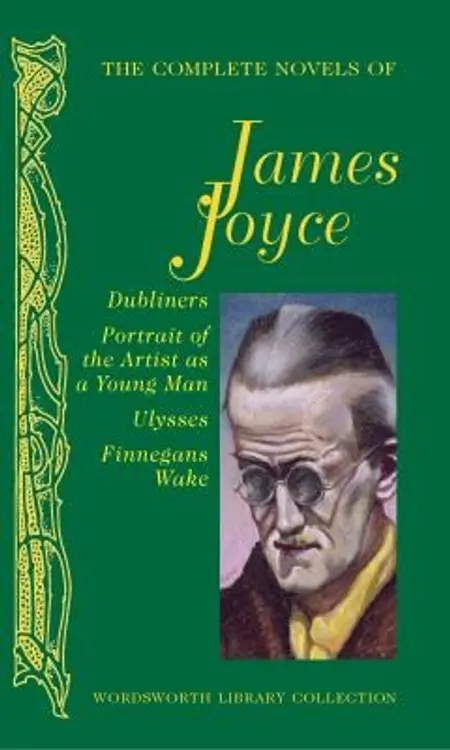
The Complete Novels Of James Joyce
Joyce, James

The Dead
Joyce, James

The Best Short Stories of the Modern Age
Chekhov, Anton Pavlovich, Douglas Angus, Douglas Angus
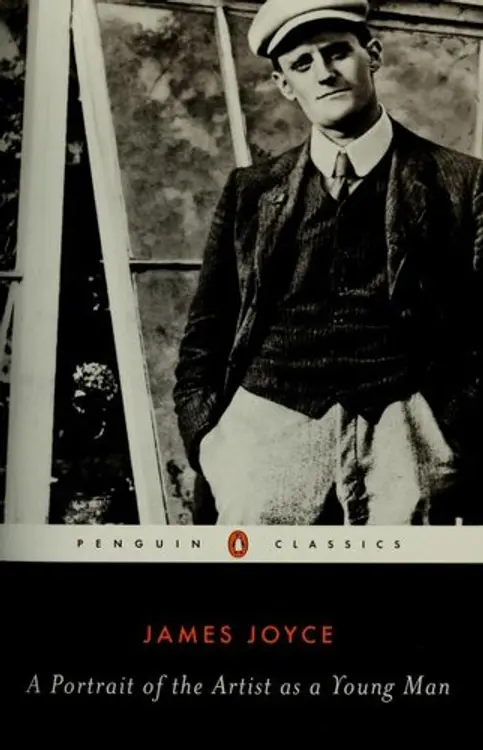
A Portrait of the Artist as a Young Man (Penguin Classics)
James Joyce, J Joyce, james joyce, Joyce, James, Seamus Deane
Sisters (Commuter's Library)
Joyce, James
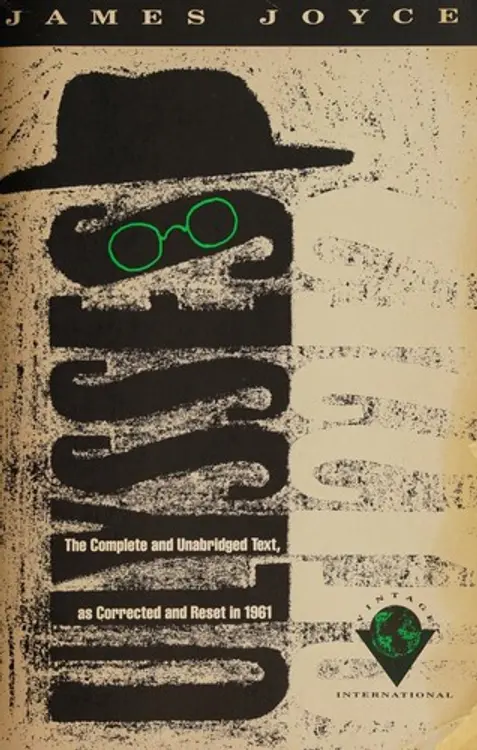
Ulysses
Joyce, James
17h 44m read
10 Relatos de Mujeres (Coleccion Diez Relatos)
Alberto Moravia, Truman Streckfus Persons, Patricia Highsmith, Rosamunde Pilcher, Joyce, James, Rosa Montero, Manuel Vázquez Montalbán, Edith Wharton, Isaac Asimov, Various
Reader Reviews
No reviews yet for this book.
Be the first to share your thoughts!