
Civil war on Race Street
the civil rights movement in Cambridge, Maryland
Our rough guess is there are 60,500 words in this book.
At a pace averaging 250 words per minute, this book will take 4 hours and 2 minutes to read. With a half hour per day, this will take 8 days to read.
How long will it take you?
This book will take an estimated to read at a reading speed averaging words per minute. With 30 minutes per day, this will take to read.
Enter your reading speedYou can take one of our WPM reading speed tests to find your reading speed.
Create a free account to track your reading progress, build your reading list, and set reading goals.
We earn a commission on purchases
Author
Publication
2003 - University Press of Florida, Gainesville, Florida
Language
English
Word Count
60,500 words, Guess
Page Count
242 pages
Identifiers
- Open LibraryOL3682149M
- ISBN-100813026385
- OCLC Control Number51454514
- OCLC Control Numbercivilwaronracest0000levy_y1b5
- Library of Congress Control Number2003040189
and 2 more
- Goodreads4835878
- LibraryThing3530424
Classifications
- DDC323.1/196073075227/09046
- LCCF189.C345 L485 2003
Description
"Civil War on Race Street, so named because Race Street was the road that divided blacks and whites in Cambridge, Maryland, is a detailed examination of one of the most vibrant locally based struggles for racial equality during the 1960s. Beginning with an overview of Cambridge, particularly its history of racial and class relations, Peter Levy traces the emergence of the modern civil rights movement in this city on Maryland's Eastern Shore." "Catalyzed by the arrival of freedom riders in 1962, the movement in Cambridge expanded in 1963 and 1964 under the leadership of Gloria Richardson, one of the most prominent (and one of the few female) civil rights leaders in the nation. In the years after her departure from Cambridge, the movement went into decline until 1967, when it underwent a brief revival that culminated with a riot allegedly incited by black power spokesman H. Rap Brown. In the wake of the riot, blacks and whites in Cambridge sought to rebuild their city and return to a politics of moderation. However, Spiro Agnew, then governor of Maryland, used the riot to advance his political career and the fortunes of the New Right, thereby garnering the attention of the public (as well as Richard Nixon) and achieving the vice-presidency in 1968. At the same time, Brown saw his influence and that of the civil rights movement decline." "In addition to providing valuable insights into Richardson and Agnew, this study is one of the few to examine a community in a "border" state. Levy demonstrates that the goals of the movement were not universal, that strategies underwent constant political and social change, and that the impact on the micro level was not as clean and immediate as historians would have us believe."--BOOK JACKET.
Subjects
Topics
Times
Series Statement
- Southern dissent
Other Editions
- Civil war on Race Street: the civil rights movement in Cambridge, Maryland
Similar Books
Civil Rights Movement: Revised Edition

Voices in Our Blood: America's Best on the Civil Rights Movement
Jon Meacham
"I have a dream": the quotations of Martin Luther King Jr.
compiled and edited by Lotte Hoskins.

Why we can't wait
Martin Luther King, Jr ; with a new afterword by the Reverend Jesse L. Jackson, Sr.
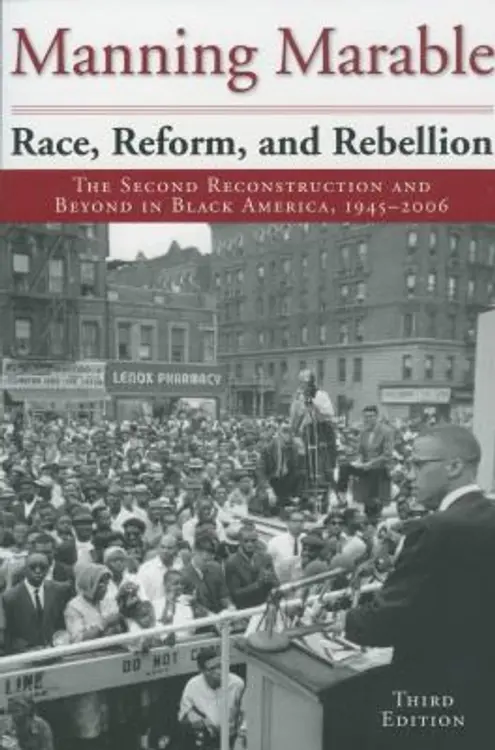
Race, Reform, and Rebellion: The Second Reconstruction and Beyond in Black America, 1945-2006, Third Edition
Manning Marable, Manning Marable

Where do we go from here: chaos or community?
Martin Luther King, Jr. ; [foreword by Coretta Scott King ; introduction by Vincent Harding]
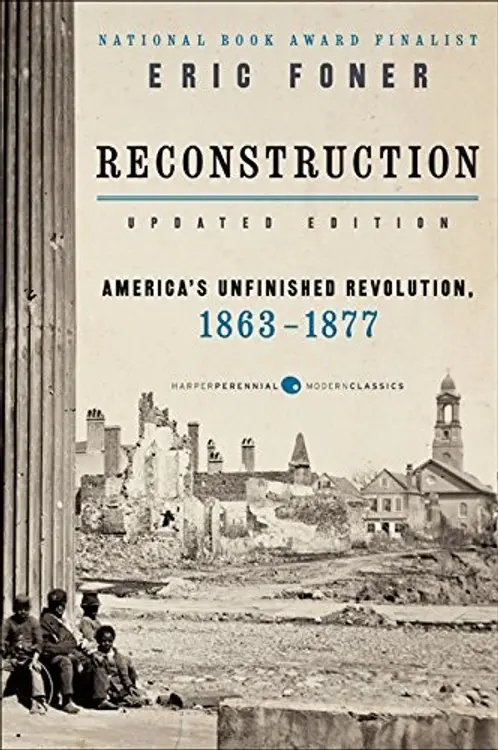
Reconstruction Updated Edition: America's Unfinished Revolution, 1863-1877
Eric Foner

Reconstruction: America's unfinished revolution, 1863-1877
Eric Foner.
Reader Reviews
No reviews yet for this book.
Be the first to share your thoughts!