
Reflections of an affirmative action baby
Our rough guess is there are 71,500 words in this book.
At a pace averaging 250 words per minute, this book will take 4 hours and 46 minutes to read. With a half hour per day, this will take 10 days to read.
How long will it take you?
This book will take an estimated to read at a reading speed averaging words per minute. With 30 minutes per day, this will take to read.
Enter your reading speedYou can take one of our WPM reading speed tests to find your reading speed.
Create a free account to track your reading progress, build your reading list, and set reading goals.
We earn a commission on purchases
Author
Publication
1991 - BasicBooks, [New York, N.Y.], New York (State)
Language
English
Word Count
71,500 words, Guess
Page Count
286 pages
Identifiers
- Open LibraryOL1572975M
- ISBN-100465068715
- OCLC Control Number23767352
- Internet Archivereflectionsofaff0000cart
- Library of Congress Control Number91070054
and 2 more
- LibraryThing7759
- Goodreads3249557
Classifications
- DDC331.13/3/0973
- LCCHF5549.5.A34 C37 1991
Description
In a climate where whites who criticize affirmative action risk being termed racist and blacks who do the same risk charges of treason and self hatred, a frank and open discussion of racial preference is difficult to achieve. But, in the first book on racial preference written from personal experience, Reflections of an Affirmative Action Baby, Stephen L. Carter, Cromwell Professor of Law at Yale University and self-described beneficiary (and, at times, victim) of affirmative action, does it.Using his own story of success and frustration as "an affirmative action baby" as a point of departure, Carter, who has risen to the top of his profession, provides an incisive analysis of one of the most incendiary topics of our day--as well as an honest critique of the pressures on black professionals and intellectuals to conform to the "politically correct" way of being black.Affirmative action as it is practiced today not only does little to promote racial equality, Carter argues, but also allows the nation to escape rather cheaply from its moral obligation to undo the legacy of slavery. Affirmative action, particularly in hiring often reinforces racist stereotypes by promoting the idea that the black professional cannot aspire to anything more than being "the best black." Has the time come to abandon these programs? No--but affirmative action must return to its simpler roots, Carter argues: to provide educational opportunities for those who might not otherwise have them. Then the beneficiaries should demand to be held to the same standards as anyone else.
Subjects
Topics
Places
Similar Books

The Mis-Education of the Negro
Woodson, Carter Godwin, George G.M. James, Tony Darnell
Black reconstruction in America: an essay toward a history of the part which black folk played in the attempt to reconstruct democracy in America, 1860-1880.
Henry Louis Gates, Jr., Eric Foner

Hunger of memory: the education of Richard Rodriguez : an autobiography.
Richard Rodriguez

The new Jim Crow: mass incarceration in the age of colorblindness
Michelle Alexander ; [with a new foreword by Cornel West]

Between the World and Me
Ta-Nehisi Coates

The Souls of Black Folk
Prentice Onayemi, Héctor Arnau, Henry Louis Gates, Jr., Patricia H. Hinchey, Walter Covell, Farah Jasmine Griffin, Shawn Alexander, Slingshot Books, Arnold Rampersad, Monica M. Elbert, Brent Hayes Edwards, Eugene F. Provenzo
4h 36m read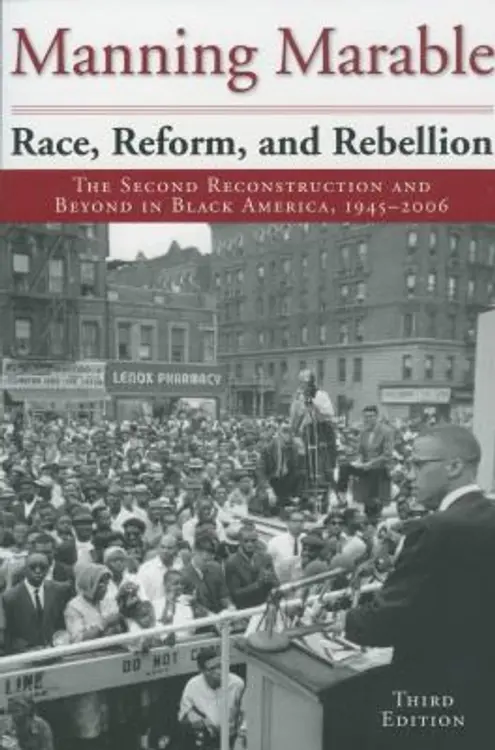
Race, Reform, and Rebellion: The Second Reconstruction and Beyond in Black America, 1945-2006, Third Edition
Manning Marable, Manning Marable

Where do we go from here: chaos or community?
Martin Luther King, Jr. ; [foreword by Coretta Scott King ; introduction by Vincent Harding]
Reader Reviews
No reviews yet for this book.
Be the first to share your thoughts!