
Everyday Stalinism
ordinary life in extraordinary times : Soviet Russia in the 1930s
Our rough guess is there are 72,000 words in this book.
At a pace averaging 250 words per minute, this book will take 4 hours and 48 minutes to read. With a half hour per day, this will take 10 days to read.
How long will it take you?
This book will take an estimated to read at a reading speed averaging words per minute. With 30 minutes per day, this will take to read.
Enter your reading speedYou can take one of our WPM reading speed tests to find your reading speed.
Create a free account to track your reading progress, build your reading list, and set reading goals.
We earn a commission on purchases
Author
Publication
1999 - Oxford University Press, New York, New York (State)
Language
English
Word Count
72,000 words, Guess
Page Count
288 pages
Identifiers
- Open LibraryOL355632M
- ISBN-100195050002
- OCLC Control Number38573998
- OCLC Control Numbereverydaystalinis0000fitz
- Library of Congress Control Number98015421
and 2 more
- LibraryThing69517
- Goodreads978045
Classifications
- DDC306/.0947
- LCCHN523 .F57 1999
Description
Here is a pioneering account of everyday life under Stalin, written by one of our foremost authorities on modern Russian history. Focusing on urban areas in the 1930s, Sheila Fitzpatrick shows that with the adoption of collectivization and the first Five-Year Plan, everyday life was utterly transformed. With the abolition of the market, shortages of food, clothing, and all kinds of consumer goods became endemic. It was a world of privation, overcrowding, endless queues, and broken families, in which the regime's promises of future socialist abundance rang hollow. We read of a government bureaucracy that often turned everyday life into a nightmare, and of the ways that ordinary citizens tried to circumvent it, primarily by patronage and the ubiquitous system of personal connections known as blat. And we read of the police surveillance that was ubiquitous to this society, and the waves of terror, like the Great Purges of 1937, that periodically cast this world into turmoil. Fitzpatrick illuminates the ways that Soviet city-dwellers coped with this world, examining such diverse activities as shopping, traveling, telling jokes, finding an apartment, getting an education, landing a job, cultivating patrons and connections, marrying and raising a family, writing complaints and denunciations, voting, and trying to steer clear of the secret police.
Subjects
Topics
Places
Times
Similar Books

The Agony of the Russian idea
Tim McDaniel.
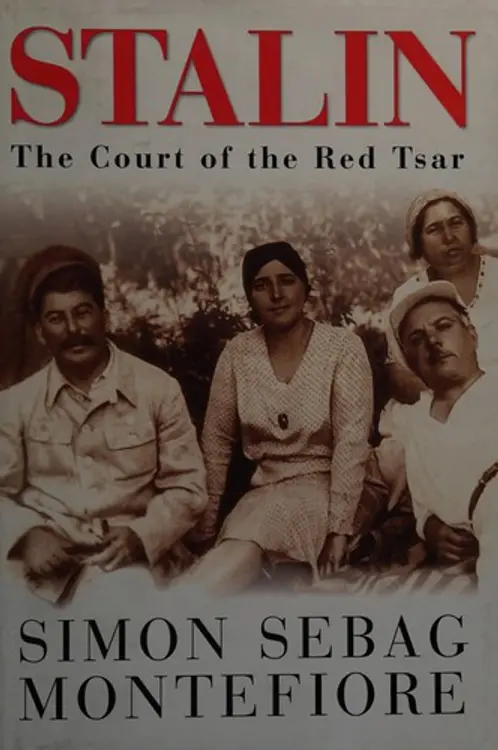
STALIN: THE COURT OF THE RED TSAR.
Simon Sebag-Montefiore

In Stalin's Shadow: The Career of "Sergo" Ordzhonikidze (The New Russian History)
Kathy S. Transchel, O. V. Khlevni͡uk, Oleg V. Khlevniuk, Donald J. Raleigh

Stalin
Hiroaki Kuromiya.
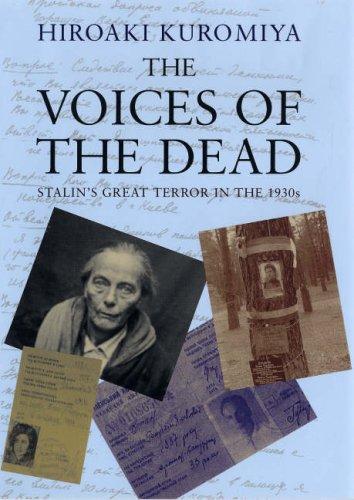
The Voices of the Dead: Stalin's Great Terror in the 1930s
Hiroaki Kuromiya
Montaillou Cathars and Catholic In a Frenc
Barbara Bray, Emmanuel Le Roy Ladurie
Into the Whirlwind
by Evgenia Semyonvna Ginzburg ; translated from the Russian by Paul Stevenson and Manya Harari.
Voprosy leninizma.
Joseph Stalin
Reader Reviews
No reviews yet for this book.
Be the first to share your thoughts!