
Lincoln's proclamation
emancipation reconsidered
Our rough guess is there are 58,250 words in this book.
At a pace averaging 250 words per minute, this book will take 3 hours and 53 minutes to read. With a half hour per day, this will take 8 days to read.
How long will it take you?
This book will take an estimated to read at a reading speed averaging words per minute. With 30 minutes per day, this will take to read.
Enter your reading speedYou can take one of our WPM reading speed tests to find your reading speed.
Create a free account to track your reading progress, build your reading list, and set reading goals.
Contributions
- Blair, William Alan. - Contributor
- Younger, Karen Fisher. - Contributor
Publication
2009 - University of North Carolina Press, Chapel Hill, North Carolina
Language
English
Word Count
58,250 words, Guess
Page Count
233 pages
Physical Format
Hardcover
Identifiers
- Internet Archiveisbn_9780807833162
- ISBN-100807833169
- ISBN-139780807833162
- LibraryThing9033276
- Goodreads6876382
and 4 more
- Library of Congress Control Number2009016601
- OCLC Control Number317929502
- Better World Books9780807833162
- Open LibraryOL23213331M
Classifications
- DDC973.7092
- LCCE457.2 .L8435 2009
- LCCE457.2.L8435 2009
Description
The eight contributors to this volume assess the proclamation by considering not only aspects of the president's decision making, but also events beyond Washington. --from publisher description Abraham Lincoln's Emancipation Proclamation is popularly regarded as a heroic act by a great American president. Widely remembered as the document that ended slavery, the proclamation in fact freed slaves only in the rebellious South (and not in the Border States, where slavery remained legal) and, effectively, only in the parts of the South occupied by the Union. Among historians, questions persist regarding Lincoln's moral conviction and the extent to which the proclamation truly represented a radical stance on the issue of freedom. The proclamation itself remains a misunderstood document because of its complicated history and legalistic prose. The eight essays in this volume enrich our understanding of the proclamation by considering not only aspects of the president's decision making, but also events beyond Washington. The proclamation provides a launching point for new insights on the consequences and legacies of freedom, the engagement of black Americans in their liberation, and the issues of citizenship and rights that were not decided by Lincoln's document. The contributors view the proclamation from a variety of perspectives, including how we remember the ending of slavery both in the United States and in the Atlantic world. Together the essays portray emancipation as a product of many hands, best understood when considering all the various actors, the place, and the time. - Jacket flap.
Subjects
Topics
Genres
- Congresses
Series Statement
- The Steven and Janice Brose lectures in the Civil War era
Other Editions
- Lincoln's proclamation: emancipation reconsidered
Similar Books
The Emancipation Proclamation: the National Archives experience
Franklin, John Hope, United States. President (1861-1865 : Lincoln)
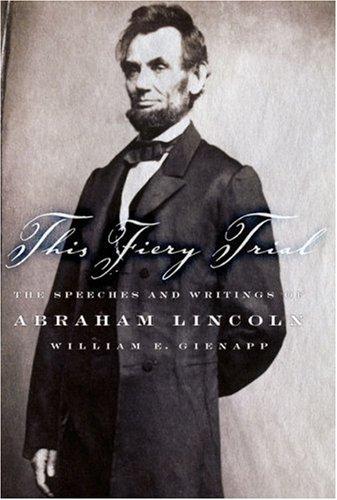
This fiery trial: the speeches and writings of Abraham Lincoln
edited by William E. Gienapp.

Abraham Lincoln, Slavery, and the Civil War: Selected Writings and Speeches (The Bedford Series in History and Culture)
Abraham Lincoln
Reader Reviews
No reviews yet for this book.
Be the first to share your thoughts!