
Rising from the rails
Pullman porters and the making of the Black middle class
1st ed.
Our rough guess is there are 78,500 words in this book.
At a pace averaging 250 words per minute, this book will take 5 hours and 14 minutes to read. With a half hour per day, this will take 11 days to read.
How long will it take you?
This book will take an estimated to read at a reading speed averaging words per minute. With 30 minutes per day, this will take to read.
Enter your reading speedYou can take one of our WPM reading speed tests to find your reading speed.
Create a free account to track your reading progress, build your reading list, and set reading goals.
We earn a commission on purchases
Word Count
78,500 words, Guess
Page Count
314 pages
Identifiers
- Open LibraryOL23272663M
- ISBN-100805070753
- OCLC Control Number53926648
- OCLC Control Numberrisingfromrailsp0000tyel
- Library of Congress Control Number2003067573
and 2 more
- Goodreads2492290
- LibraryThing177131
Classifications
- LCCHD8039.R362 U68 2004
Description
"From the 1860s, when George Pullman first hired African-Americans to work on his luxury sleeping cars, until the mid-twentieth century, when the Pullman Company ended its sleeper service, the Pullman porter held one of the best jobs in the black community and one of the worst on the train. He was maid and valet, nanny and doctor, concierge and occasional undertaker to cars full of white passengers. His very presence embodied the romance of the railroad. But behind the porter's ever-present smile lay a day-by-day struggle for dignity on the long trips that separated him from his family while exposing him to the more privileged culture of well-heeled riders. Rising from the Rails depicts the paradox of life as a Pullman porter and writes a missing chapter of American history." "Larry Tye re-creates the singular setting of a Pullman sleeping car, a capsule of space and time where all the rules of racial engagement came into focus and many were suspended - so long as the train was moving. The dichotomy of the porter's working life - duties not far removed from slavery, opportunities not available to other black workers in Jim Crow America - made him both a representative of his time and a trialblazer. The period of the porter's employment by the Pullman Company coincides almost exactly with the struggle of newly freed slaves for the full legal freedoms finally achieved in the 1960s, and his largely unrecognized role in this struggle was critical. As the patriarch of black labor unions and the civil rights movement, he was among the first African-Americans to effectively claim a right to respect. He was also the father and grandfather of the African-Americans who today run cities and states, sit on corporate and editorial boards, and number among this country's leading professors, scientists, and clergy." "Drawing on extensive interviews with dozens of African-American railroad workers and their descendents, Rising form the Rails tells the quintessentially American story of how minority finds a foothold in the workplace and the nation's psyche."--BOOK JACKET.
First Sentence
HE WAS A black man in a white jacket and sable hat.
Excerpt
HE WAS A black man in a white jacket and sable hat.
Subjects
Topics
Places
Other Editions
- Rising from the rails: Pullman porters and the making of the Black middle class
Similar Books

The Armies of Labor: A Chronicle of the Organized Wage-Earners
Samuel Peter Orth
The Philadelphia Negro: a social study
by W.E. Burghardt Du Bois ; together with a special report on domestic service by Isabel Eaton.
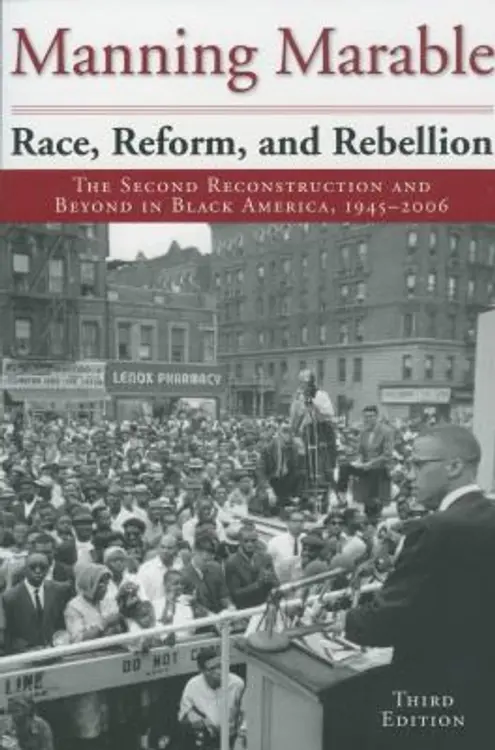
Race, Reform, and Rebellion: The Second Reconstruction and Beyond in Black America, 1945-2006, Third Edition
Manning Marable, Manning Marable
Reader Reviews
No reviews yet for this book.
Be the first to share your thoughts!