
Churchill and empire
a portrait of an imperalist
First Pegasus Books hardcover edition.
Our rough guess is there are 113,000 words in this book.
At a pace averaging 250 words per minute, this book will take 7 hours and 32 minutes to read. With a half hour per day, this will take 15 days to read.
How long will it take you?
This book will take an estimated to read at a reading speed averaging words per minute. With 30 minutes per day, this will take to read.
Enter your reading speedYou can take one of our WPM reading speed tests to find your reading speed.
Create a free account to track your reading progress, build your reading list, and set reading goals.
Word Count
113,000 words, Guess
Page Count
452 pages
Identifiers
- Internet Archivechurchillempirep0000jame
- Internet Archivechurchillempirep0000jame_r6n1
- ISBN-101605985694
- ISBN-139781605985695
- Library of Congress Control Number2014497784
and 3 more
- OCLC Control Number858843458
- Better World Books9781605985695
- Open LibraryOL27160292M
Classifications
- DDC941.084092
- LCCDA566.9.C5 J36 2014
- LCCDA566.9.C5 J29 2014
and 1 more
- LCCDA566.9.C5J29 2014
Description
"As a young army officer in the late 19th century, Churchill's first experience of the Empire was serving in conflicts in India, South Africa and the Sudan. His attitude towards the Empire at the time was the stereotypical Victorian paternalistic approach - a combination of feeling responsible and feeling superior. Conscious even then of his political career ahead, Churchill's natural benevolence towards the Empire was occasionally overruled for political reasons, and he found himself reluctantly supporting - or at least not publicly condemning - British atrocities. As a politician he consistently relied on the Empire for support during crises, but was angered by any demands for nationalisation. He held what many would regard today as racist views, in that he felt that some nationalities were superior to others, but he didn't regard those positions as fixed. His (some might say obsequious) relationship with America reflected that view.^ America was a former colony where the natives had become worthy to rule themselves, but - he felt - still had that tie to Britain. Thus he overlooked the frequently expressed American view that the Empire was a hangover from a bygone era of colonisation, and reflected poorly on Britain's ability to conduct herself as a political power in the current world order. This outmoded attitude was one of the reasons the British voters rejected him after a Second World War in which - it was universally felt - he had led the country brilliantly. His attitude remained Victorian in a world that was shaping up very differently. However, it would be a mistake to consider Churchill merely as an anachronistic soldier. He grasped the problems of the Cold War immediately, believing that immature nations prematurely given independence would be more likely to be sucked into the vortex of Communism.^ This view chimed with American foreign policy, and made the Americans rather more pragmatic about their demands for self-governance for Empire countries. Lawrence James has written a fascinating portrait of an endlessly interesting statesman - and one that includes tantalising vignettes about his penchants for silk underwear and champagne." --www.amazon.com.
Subjects
Topics
Places
Times
Other Editions
- Churchill and empire: a portrait of an imperalist
Similar Books
Churchill: walking with destiny
Andrew Roberts

Churchill: a photographic portrait
by Martin Gilbert.

The Last Lion: Winston Spencer Churchill: Alone, 1932-1940
William Manchester
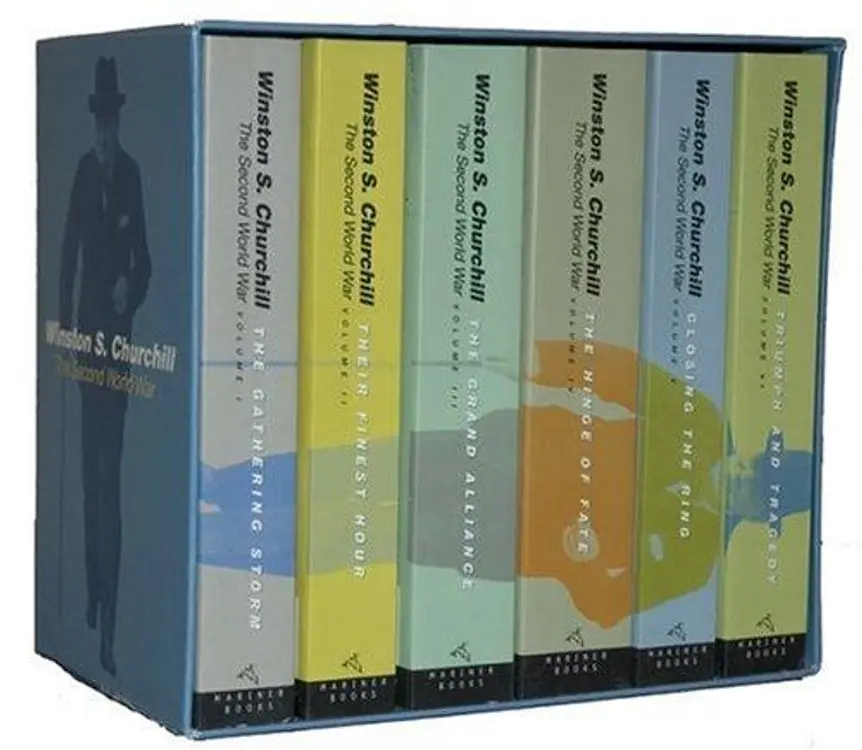
The Second World War (Six Volume Boxed Set)
Churchill, Winston, John Keegan
My African journey
by Winston Spencer Churchill.
The story of the Malakand field force: an episode of frontier war
by Winston L. Spencer Churchill with maps , plans, etc.

Churchill: visionary, statesman, historian
John Lukacs.

Winston S. Churchill.
Randolph S. Churchill.
Reader Reviews
No reviews yet for this book.
Be the first to share your thoughts!