
Aesthetic autobiography
from life to art in Marcel Proust, James Joyce, Virginia Woolf and Anaïs Nin
[New ed.] with alterations.
Our rough guess is there are 55,750 words in this book.
At a pace averaging 250 words per minute, this book will take 3 hours and 43 minutes to read. With a half hour per day, this will take 8 days to read.
How long will it take you?
This book will take an estimated to read at a reading speed averaging words per minute. With 30 minutes per day, this will take to read.
Enter your reading speedYou can take one of our WPM reading speed tests to find your reading speed.
Create a free account to track your reading progress, build your reading list, and set reading goals.
Word Count
55,750 words, Guess
Page Count
223 pages
Identifiers
- ISBN-139780312172893
- ISBN-10033367071X
- ISBN-100333460014
- ISBN-100312121709
- ISBN-100312172893
and 8 more
- ISBN-139780333670712
- ISBN-139780333460016
- ISBN-139780312121709
- LibraryThing6738292
- Goodreads1279492', '244457
- Better World Books9780333670712
- Better World Books9780312172893
- Open LibraryOL22116235M
Classifications
- LCCPR756.A
- LCCPN45-PN57HM623PN3311
- DDC823/.9129353
Description
Aesthetic Autobiography is a pathbreaking study in comparative literature which gets to the heart of what is literary at a time when the classic distinctions between literature and other forms of writing are under attack. Suzanne Nalbantian provides a precise and highly original basis to identify literary art with her novel approach to autobiography. Selectively reviewing both the history of autobiography proper and the critical studies to date, she positions her subject in a new area of aesthetics by demonstrating the transmutation of life fact into fiction in the modern autobiographical novel. Re-examining key writers of the early twentieth-century - Marcel Proust, James Joyce, Virginia Woolf, with Anais Nin in their wake - Nalbantian discerns models of a hybrid genre characterized by a common aesthetics. She discovers in these writings a threshold of artistic transformation beyond the identification of biographical authenticity. Juxtaposing the fiction of these novelists with the standard biographies of them, Nalbantian finds a heightened reference with respect to self, place, and object. She shows how these authors, who focus on their own experiences with unusual intensity, transform their authentic life material into the artificial by aesthetic detachment and distancing. Such artistic processes include the distortion of time and chronology, the dislocation of place, the splitting of the 'I' into multiple personae, the conflation of persons and places, substitution, the aggrandizement of characteristics, and the symbolization of obsession. The book sheds new light on the creative process of fictionalization.
First Sentence
Formal autobiography has always been assumed to be a genre of its own, even though it is said that it was not until 1809 that the English writer Robert Southey coined the word in the Quarterly Review.
Excerpt
Formal autobiography has always been assumed to be a genre of its own, even though it is said that it was not until 1809 that the English writer Robert Southey coined the word in the Quarterly Review.
Subjects
Topics
People
Times
Other Editions
- Aesthetic autobiography: from life to art in Marcel Proust, James Joyce, Virginia Woolf and Anaïs Nin
Similar Books

The diary of Virginia Woolf
edited by Anne Olivier Bell ; introd. by Quentin Bell.

A writer's diary: being extracts from the diary
of Virginia Woolf ; edited by Leonard Woolf
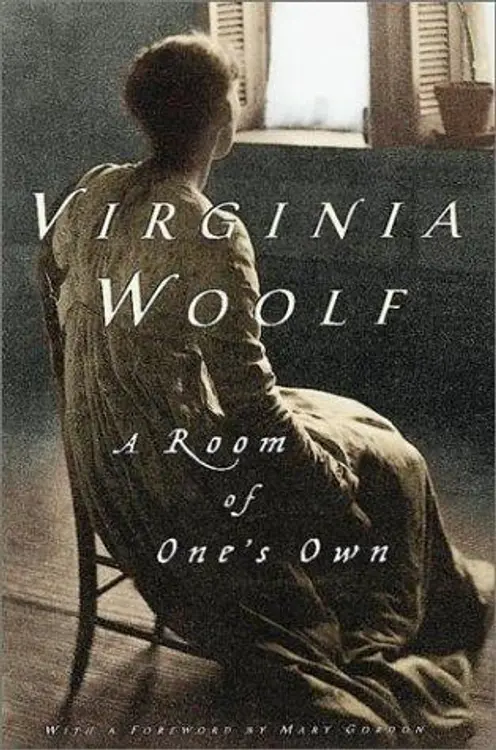
A room of one's own
Virginia Woolf ; foreword by Mary Gordon.

Written work: Langland, labor, and authorship
edited by Steven Justice and Kathryn Kerby-Fulton.
Pagnol: La gloire de mon père, and Le château de ma mère.
David Coward

A reader's guide to Remembrance of things past
compiled by Terence Kilmartin.

Proust and signs: the complete text
Gilles Deleuze ; translated by Richard Howard.
The world of Marcel Proust
André Maurois ; translated from the French by Moura Budberg, with the assistance of Barbara Creed ; special photos. and research by André Ostier.
Reader Reviews
No reviews yet for this book.
Be the first to share your thoughts!