
Against all hope
resistance in the Nazi concentration camps, 1938-1945
1st U.S. ed.
Our rough guess is there are 125,500 words in this book.
At a pace averaging 250 words per minute, this book will take 8 hours and 22 minutes to read. With a half hour per day, this will take 17 days to read.
How long will it take you?
This book will take an estimated to read at a reading speed averaging words per minute. With 30 minutes per day, this will take to read.
Enter your reading speedYou can take one of our WPM reading speed tests to find your reading speed.
Create a free account to track your reading progress, build your reading list, and set reading goals.
We earn a commission on purchases
Word Count
125,500 words, Guess
Page Count
502 pages
Identifiers
- Open LibraryOL21933188M
- ISBN-101557783632
- OCLC Control Number27430268
- OCLC Control Numberagainstallhopere0000lang
- Library of Congress Control Number93016247
and 2 more
- Goodreads1213146
- LibraryThing655866
Classifications
- DDC943.086
- LCCDD256.3
Description
In this major and comprehensive work, hailed by Le Monde as a "monumental study," Hermann Langbein shatters the myth that all prisoners of concentration camps during World War II passively let themselves be slaughtered. A prisoner himself and one of the leaders of resistance at Auschwitz, Langbein painstakingly documents the detailed account of the history of the camps and the story of resistance. Spanning the initial years to the chaotic weeks before liberation, Against All Hope is the first systematic presentation of organized resistance. Deeply moving, it is an unforgettable testament to the resilience and determination of the human spirit. . As the camps were being established, Langbein examines the composition of the initial prisoners; a mixture of political prisoners (Reds), convicted criminals (Greens), Jews, and "anti-socials" and reveals the brutal struggle for camp domination between the Reds and Greens. With analytic detail, he presents the history and nature of the individual camps and the inmate self-government. In "The Actors," Langbein recognizes for the first time the various inmate groups, Germans, Austrians, Poles, Russians, Communists, Socialists, Jehovah's Witnesses, Gypsies and Jews, and how they related to resistance. Langbein portrays the incredible impossibility of resistance against the all-powerful total domination of the Nazi camp administration. The prisoners were to be morally broken, psychically disabled, and even physically destroyed. To resist against this systematic demoralization, its isolation from the rest of the world, and its intention to exterminate, was inconceivable. Through chronic malnutrition, beatings, torture, and the permanent terrorism of the SS, the prisoners were led to believe "there is only one way out of here: through the chimney." And yet, resistance, individual initiatives and organized action, to aid fellow inmates, to escape, to revolt, to thwart management campaigns, to mitigate the horrendous crimes were accomplished. In this historical documentary, with haunting accuracy, Langbein describes the acts of resistance and rebellion and the final phase of the camps, including death marches and liberation. Langbein explains that he wrote this "final study" so that the heroic resistance and the resilience of the human spirit would be recognized. He writes, "in all camps many people who were subject to boundless terror, with no hope of help from the outside, did try to resist and were not discouraged by repeated disappointments or incriminating decisions that such activities required. The fact that there was such resistance is convincing proof that while an inhumane regime can murder people, it cannot completely stamp out human impulses of the part of those allowed to live. This experience fills me with optimism."
Subjects
Topics
Places
Times
Other Editions
- Against all hope: resistance in the Nazi concentration camps, 1938-1945
Show 2 more editions
Similar Books

The Boy in the Striped Pajamas
John Boyne

Man's Search for Meaning
Viktor Emil Frankl
3h 32m read
The White Rose: Munich, 1942-1943
Inge Scholl ; with an introduction by Dorothee Sölle ; translated from the German by Arthur R. Schultz.

Gulag: A History
Anne Applebaum
The German Dictatorship: The Origins, Structure and Effects of National Socialism
Jean Steinberg, Karl Dietrich Bracher

An Honourable Defeat: A History of German Resistance to Hitler, 1933-1945
Anton Gill.
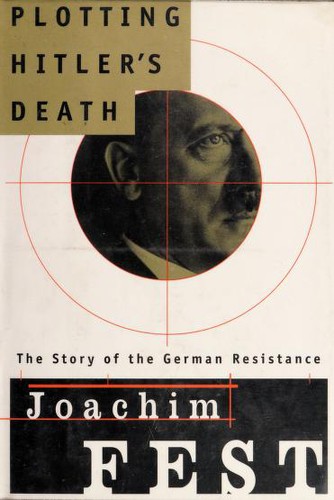
Plotting Hitler's death: the story of the German resistance
Joachim Fest ; translated by Bruce Little.

When the emperor was divine: a novel
by Julie Otsuka.
Reader Reviews
No reviews yet for this book.
Be the first to share your thoughts!