
Europa, Europa
Our rough guess is there are 54,250 words in this book.
At a pace averaging 250 words per minute, this book will take 3 hours and 37 minutes to read. With a half hour per day, this will take 7 days to read.
How long will it take you?
This book will take an estimated to read at a reading speed averaging words per minute. With 30 minutes per day, this will take to read.
Enter your reading speedYou can take one of our WPM reading speed tests to find your reading speed.
Create a free account to track your reading progress, build your reading list, and set reading goals.
We earn a commission on purchases
Author
Contributions
- Dembo, Margot Bettauer. - Contributor
Publication
1997 - Wiley in association with the United States Holocaust Museum, New York, New York (State)
Language
English
Word Count
54,250 words, Guess
Page Count
217 pages
Identifiers
- Open LibraryOL1006986M
- ISBN-100471172189
- OCLC Control Number35758242
- OCLC Control Numbereuropaeuropa00pere
- Library of Congress Control Number96046844
and 2 more
- LibraryThing638903
- Goodreads3143330
Classifications
- DDC940.53/18
- LCCD804.3 .P46513 1997
Description
With his mother's parting words ringing in his ears, fourteen-year-old Solomon Perel set out from Nazi-occupied Poland hoping to find safety across the new Soviet frontier. Like large numbers of other Jews fleeing the Germans, Perel faced staggering odds against his survival. What actually transpired was far different from what anyone could have imagined. By a startling twist of fate, the young Jew found unexpected refuge ... as a student in an elite Hitler Youth school. Now this extraordinary and true story appears in English translation for the first time. With searing power and passion, Europa, Europa recounts Solomon Perel's harrowing struggle living a nightmare from which there seemed no escape. By the time Solly, as he was called by his family, left Poland that night in 1939, he was already an experienced refugee. Sensing the oncoming Nazi terror, his family had fled Germany several years before. This time, however, the family could not stay together and the youngster would soon be on his own. Reaching the Soviet shore after a dramatic river crossing, Perel was placed in a Russian orphanage, where he was accepted into the Komsomol, the Communist organization for young people. Then came June 22, 1941. When Hitler invaded the Soviet Union Perel was ordered, along with the other Jewish children, to flee into the interior. He fell into the hands of the German forces. Paralyzed by fear, and with a courage born of despair, Perel told his captors that he was, in reality, an ethnic German. To his astonishment, he was believed, and from that point on, his survival centered on his ability to conceal his true identity. Taken under the wing of the Wehrmacht unit, Perel experienced combat, and was lauded as a model of German youth contributing at the front. Then, in an extraordinary turn of events, Perel was transferred back to Germany, and awarded a coveted spot in an exclusive boarding school training Hitler Youth to face the challenges of the Fuhrer's vision of postwar Europe. Tormented by the ethical struggle of his position - in effect, joining the ranks of those attempting to exterminate his people - at the same time Perel lived in terror of what seemed the inevitable discovery of his real identity.
Subjects
Topics
People
Similar Books
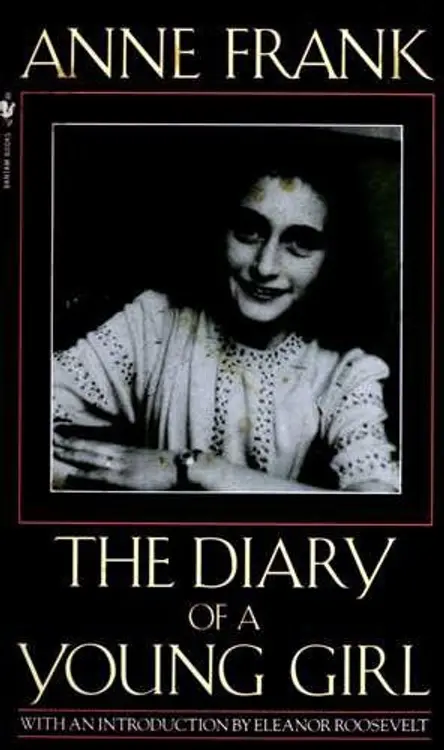
The Diary of a Young Girl
Anne Frank ; translated from the Dutch by B.M. Mooyaart-Doubleday ; with an introduction by Eleanor Roosevelt.
6h 8m read
The Pianist: The Extraordinary Story of One Man's Survival in Warsaw, 1939-45
Władysław Szpilman, Anthea Bell, Wilm Hosenfeld

An Interrupted Life: The Diaries, 1941-1943 ; and, Letters from Westerbork
Etty Hillesum ; translated from the Dutch by Arnold J. Pomerans ; foreword by Eva Hoffman ; introduction and notes by Jan G. Gaarlandt.

Man's Search for Meaning
Viktor Emil Frankl
3h 32m read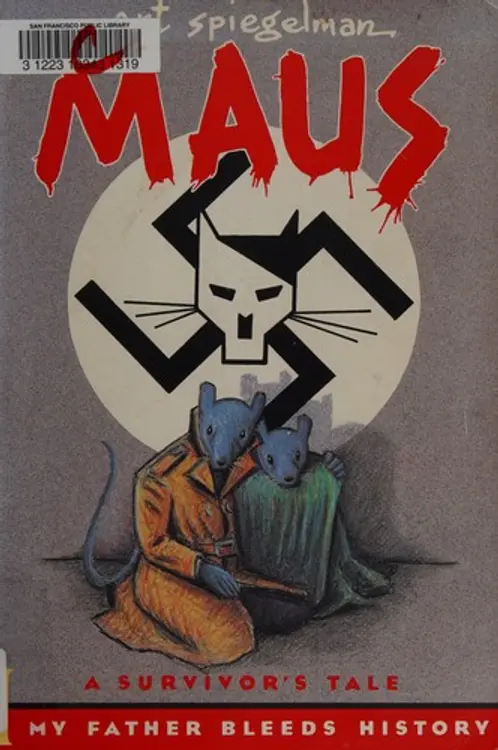
Maus I: a survivor's tale : my father bleeds history
Art Spiegelman.

The Complete Maus
Art Spiegelman

People in Auschwitz
Hermann Langbein ; translated by Harry Zohn ; foreword by Henry Friedlander

Ordinary men: Reserve Police Battalion 101 and the final solution in Poland
Christopher R. Browning
Reader Reviews
No reviews yet for this book.
Be the first to share your thoughts!