
Metaphors of dispossession
American beginnings and the translation of empire, 1492-1637
Our rough guess is there are 92,500 words in this book.
At a pace averaging 250 words per minute, this book will take 6 hours and 10 minutes to read. With a half hour per day, this will take 13 days to read.
How long will it take you?
This book will take an estimated to read at a reading speed averaging words per minute. With 30 minutes per day, this will take to read.
Enter your reading speedYou can take one of our WPM reading speed tests to find your reading speed.
Create a free account to track your reading progress, build your reading list, and set reading goals.
We earn a commission on purchases
Author
Publication
1997 - University of Oklahoma Press, Norman, Oklahoma
Language
English
Word Count
92,500 words, Guess
Page Count
370 pages
Identifiers
- Open LibraryOL1012158M
- ISBN-100806129530
- OCLC Control Number36112169
- OCLC Control Numbermetaphorsofdispo0000mack
- Library of Congress Control Number96052787
and 2 more
- LibraryThing2650210
- Goodreads2569442
Classifications
- DDC970.01/7/072
- LCCE127 .M2 1997
Description
In this timely contribution to colonial studies, Gesa Mackenthun analyzes English and Spanish narratives of the "discovery" and colonization of America, from the Caribbean and Mexico north to Virginia and New England. She shows how Europeans wrote themselves into possession of America by translating their deep-seated colonial anxiety into the ideology of native savagery and rightful territorial ownership. The Europeans' metaphors of domination depended on silencing indigenous voices even as the writers pretended to record Native leaders. This series of theoretically informed readings includes Hernan Cortes and Motecuhzoma, Richard Hakluyt, Ralph Lane, Sir Walter Ralegh, John Smith and Powhatan, and the Puritans. Mackenthun's New Historicist and postcolonial scholarship reveals the verbal and physical translation of empire from New Spain to New England. Her concluding chapter uses gender theory to draw a brilliant connection between the the Puritans' expulsion of Anne Hutchinson and the genocide of the Pequots, whose relationship to the land was seen as dangerously feminine in contrast to the Puritan model of masculine mastery.
Subjects
Topics
Places
Similar Books

Beyond geography: the western spirit against the wilderness
Frederick Turner.

American holocaust: the conquest of the New World
David E. Stannard.

The Broken Spears: the Aztec account of the Conquest of Mexico
edited and with an introduction by Miguel León-Portilla ; with a foreword by J. Jorge Klor de Alva ; translated from Nahuatl into Spanish by Angel María Garibay K. ; English translation by Lysander Kemp ; illustrations, adapted from original codices paintings, by Alberto Beltran.
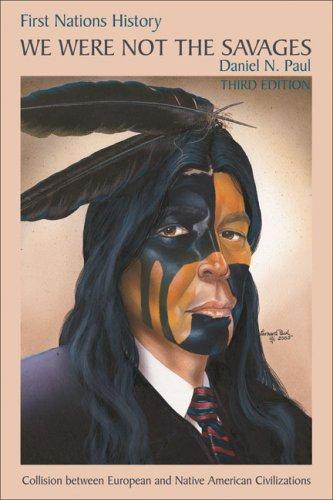
We Were Not the Savages: First Nations History - Collision Between European and Native American Civilizations (First Nations History)
Daniel N. Paul
Reader Reviews
No reviews yet for this book.
Be the first to share your thoughts!