
Shadows of the Mind
Our rough guess is there are 120,000 words in this book.
At a pace averaging 250 words per minute, this book will take 8 hours and 0 minutes to read. With a half hour per day, this will take 16 days to read.
How long will it take you?
This book will take an estimated to read at a reading speed averaging words per minute. With 30 minutes per day, this will take to read.
Enter your reading speedYou can take one of our WPM reading speed tests to find your reading speed.
Create a free account to track your reading progress, build your reading list, and set reading goals.
Word Count
120,000 words, Guess
Page Count
480 pages
Physical Format
Paperback
Identifiers
- ISBN-100099582112
- ISBN-139780099582113
- Open LibraryOL9274146M
Classifications
- DDC006.3
- LCCQ335 .P416 1994
Description
A New York Times bestseller when it appeared in 1989, Roger Penrose's The Emperor's New Mind was universally hailed as a marvelous survey of modern physics as well as a brilliant reflection on the human mind, offering a new perspective on the scientific landscape and a visionary glimpse of the possible future of science. Now, in Shadows of the Mind, Penrose offers another exhilarating look at modern science as he mounts an even more powerful attack on artificial intelligence. But perhaps more important, in this volume he points the way to a new science, one that may eventually explain the physical basis of the human mind. Penrose contends that some aspects of the human mind lie beyond computation. This is not a religious argument (that the mind is something other than physical) nor is it based on the brain's vast complexity (the weather is immensely complex, says Penrose, but it is still a computable thing, at least in theory). Instead, he provides powerful arguments to support his conclusion that there is something in the conscious activity of the brain that transcends computation - and will find no explanation in terms of present-day science. To illuminate what he believes this "something" might be, and to suggest where a new physics must proceed so that we may understand it, Penrose cuts a wide swathe through modern science, providing penetrating looks at everything from Turing computability and Godel's incompleteness, via Schrodinger's Cat and the Elitzur-Vaidman bomb-testing problem, to detailed microbiology. Of particular interest is Penrose's extensive examination of quantum mechanics, which introduces some new ideas that differ markedly from those advanced in The Emperor's New Mind, especially concerning the mysterious interface where classical and quantum physics meet. But perhaps the most interesting wrinkle in Shadows of the Mind is Penrose's excursion into microbiology, where he examines cytoskeletons and microtubules, minute substructures lying deep within the brain's neurons. (He argues that microtubules - not neurons - may indeed be the basic units of the brain, which, if nothing else, would dramatically increase the brain's computational power.) Furthermore, he contends that in consciousness some kind of global quantum state must take place across large areas of the brain, and that it is within microtubules that these collective quantum effects are most likely to reside.
First Sentence
What is the ultimate scope of science?
Excerpt
What is the ultimate scope of science?
Subjects
Topics
Other Editions
- Shadows of the Mind
Show 2 more editions
Similar Books
Godel's Proof
James Roy Newman, Ernest Nagel

The Emperor's New Mind: Concerning Computers, Minds, and the Laws of Physics (Popular Science)
Roger Penrose

Artificial Intelligence: A Modern Approach
Peter Norvig, Stuart J. Russell
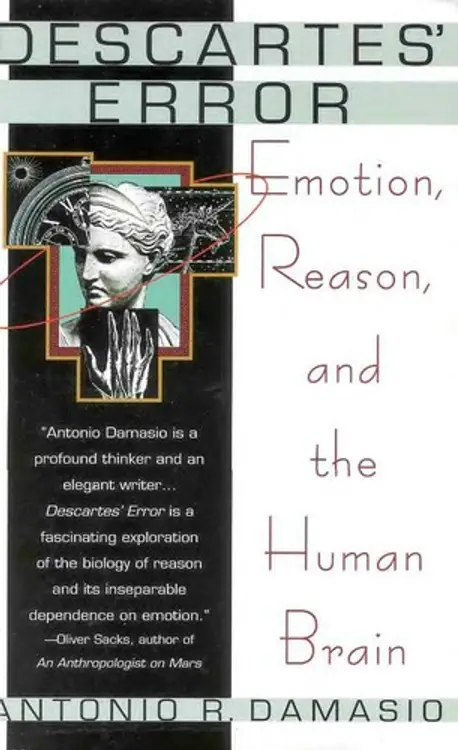
Descartes' error: emotion, reason, and the human brain
Antonio R. Damasio.

Think Like a Freak: How to Think Smarter about Almost Everything
Stephen J. Dubner, Steven D. Levitt
Quantum theory and the schism in physics
Karl R. Popper.

Consciousness explained
Daniel C. Dennett ; illustrated by Paul Weiner.
De Bono's thinking course.
Edward de Bono
Reader Reviews
No reviews yet for this book.
Be the first to share your thoughts!