
Patagonia
natural history, prehistory, and ethnography at the uttermost end of the earth
Our rough guess is there are 50,000 words in this book.
At a pace averaging 250 words per minute, this book will take 3 hours and 20 minutes to read. With a half hour per day, this will take 7 days to read.
How long will it take you?
This book will take an estimated to read at a reading speed averaging words per minute. With 30 minutes per day, this will take to read.
Enter your reading speedYou can take one of our WPM reading speed tests to find your reading speed.
Create a free account to track your reading progress, build your reading list, and set reading goals.
We earn a commission on purchases
Contributions
- McEwan, Colin. - Contributor
- Borrero, Luis Alberto. - Contributor
- Prieto, Alfredo. - Contributor
Publication
1997 - Princeton University Press, Princeton, N.J, New Jersey
Language
English
Word Count
50,000 words, Guess
Page Count
200 pages
Identifiers
- Open LibraryOL672314M
- ISBN-100691058490
- OCLC Control Number37499841
- OCLC Control Numberpatagonianatural0000unse
- Library of Congress Control Number97018348
and 2 more
- LibraryThing1384278
- Goodreads505172
Classifications
- DDC918.2/9
- LCCF2936 .P3157 1997
Description
Some fourteen to ten thousand years ago, as ice-caps shrank and glaciers retreated, the first bands of hunter-gatherers began to colonise the continental extremity of South America - 'the uttermost end of the earth'. Their arrival marked the culmination of mankind's epic journey to people the globe. These intrepid nomads confronted a hostile climate every bit as forbidding as ice-age Europe as they penetrated and settled the wilds of Fuego-Patagonia. Much later, sixteenth-century European voyagers encountered their descendants: the Aonikenk (southern Tehuelche), Selk'nam (Ona), Yomana (Yahgan) and Kaweskar (Alakaluf), living, as they saw it, in a state of savagery. The first contacts led to tales of a race of giants and, ever since, Patagonia has exerted a special hold on the European imagination. Tragically, by the mid twentieth century the last remnants of the indigenous way of life had virtually disappeared. The essays in this volume trace a largely unwritten history of human adaptation, survival and eventual extinction. They are published to accompany an exhibition on Fuego-Patagonia at the Museum of Mankind, London.
Subjects
Topics
Series Statement
- Princeton paperbacks
Other Editions
- Patagonia: natural history, prehistory, and ethnography at the uttermost end of the earth
Similar Books
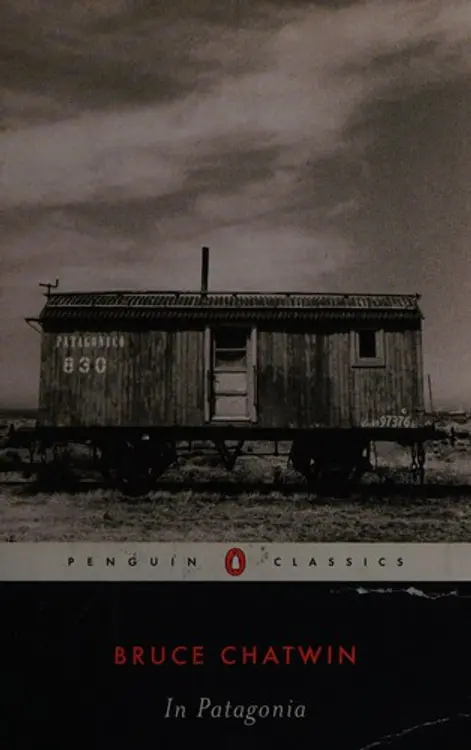
In Patagonia
Bruce Chatwin ; introduction by Nicholas Shakespeare.

Voyage of the Beagle: Charles Darwin's Journal of researches
Charles Darwin ; edited with an introduction by Janet Browne and Michael Neve.

The narrative of the Honourable John Byron: (commodore in a late expedition round the world) containing an account of the great distresses suffered by himself and his companions on the coast of Patagonia, from the year 1740, till their arrival in England, 1746. : With a description of St. Jago de Chili, and the manners and customs of the inhabitants. : Also a relation of the loss of the Wager man of war, one of Admiral Anson's squadron.
Written by himself.
Far away and long ago.
Hudson, W. H.
Reader Reviews
No reviews yet for this book.
Be the first to share your thoughts!