
Le Corbusier and the mystique of the USSR
theories and projects for Moscow, 1928-1936
Our rough guess is there are 63,500 words in this book.
At a pace averaging 250 words per minute, this book will take 4 hours and 14 minutes to read. With a half hour per day, this will take 9 days to read.
How long will it take you?
This book will take an estimated to read at a reading speed averaging words per minute. With 30 minutes per day, this will take to read.
Enter your reading speedYou can take one of our WPM reading speed tests to find your reading speed.
Create a free account to track your reading progress, build your reading list, and set reading goals.
We earn a commission on purchases
Author
Publication
1992 - Princeton University Press, Princeton, N.J, New Jersey
Language
English
Word Count
63,500 words, Guess
Page Count
254 pages
Identifiers
- Open LibraryOL1867067M
- ISBN-100691040761
- OCLC Control Number22862080
- Library of Congress Control Number90025235
- Goodreads1097439
Classifications
- DDC720/.92
- LCCNA1053.J4 C5813 1991
Description
Le Corbusier's arrival in the USSR in October 1928 to build the Moscow headquarters for Centrosoyuz created an international sensation in both the artistic and political communities: finally the crusader of "machine-age architecture" was going to encounter this seemingly modern nation whose economy and culture were in the making. Viewing the Soviet Union as a "factory for blueprints," where his role as an international expert would at last be recognized, Le Corbusier. Soon met with disappointment. Soviet authorities rejected his urban plan for Moscow, which laid the groundwork for the "Ville Radieuse" (1930) and included designs for the 1932 Palace of Soviet competition. In this detailed, colorful account of the vicissitudes of Le Corbusier's Soviet adventure, translated from the French, Jean-Louis Cohen brings to light a whole cycle of transformations in the architect's project and design strategies while providing new. Interpretations of Soviet avant-garde culture. It was the USSR, Cohen maintains, that furnished Le Corbusier with one of his greatest sources of artistic inspiration and with an ideological pretext for the extraordinary and often frenzied assertion of his ambitions. All the leading Soviet intellectuals and architects of the period--llya Ehrenburg, Sergei Eisenstein, Moisei Ginzburg, El Lissitzky, and Alexander Vesnin--play major roles in this chronicle of hope and. Disillusion. Heretofore unpublished drawings and texts illuminate controversies surrounding Le Corbusier's urban doctrine in the face of Soviet "disurbanization" and his violent opposition to the early stages of Stalin's socialist realism.
Subjects
Topics
People
Times
Other Editions
- Le Corbusier and the mystique of the USSR: theories and projects for Moscow, 1928-1936
Similar Books

Le Corbusier and the Continual Revolution in Architecture
Charles Jencks

Charlotte Perriand: livre de bord, 1928-1933
edited by Arthur Rüegg.

Adalberto Libera
Francesco Garofalo and Luca Veresani.
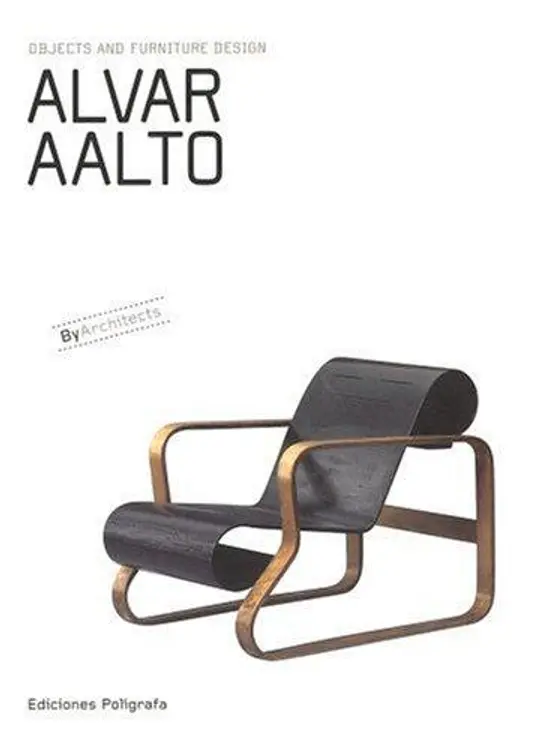
Alvar Aalto: Objects and Furniture Design By Architects
Sandra Dachs, Patricia de Muga, Laura Garcia Hintze, Alvar Aalto

David Adjaye: making public buildings : specificity, customization, imbrication
edited by Peter Allison ; [et al.]

Carlo Scarpa: The Complete Works
Francesco Dal Co, Roberto Gottardi, Giuseppe Mazzariol, Isozaki, Arata., Scarpa, Carlo

Alvaro Siza: 1986-1995
Adalberto Dias, Monteiro Jorge Nuno, Ignacio Pubino, Christian Ganshirt, Carlos Castanheira, Joan Falgueras, Madalena Cunha Matos, Mario Chaves, Alvaro Siza, Jorge Sainz
Robert A.M. Stern: houses and gardens
introduction by Witold Rybczynski ; edited by Peter Morris Dixon.
Reader Reviews
No reviews yet for this book.
Be the first to share your thoughts!