
The orientalizing revolution
Near Eastern influence on Greek culture in the early archaic age
Our rough guess is there are 56,250 words in this book.
At a pace averaging 250 words per minute, this book will take 3 hours and 45 minutes to read. With a half hour per day, this will take 8 days to read.
How long will it take you?
This book will take an estimated to read at a reading speed averaging words per minute. With 30 minutes per day, this will take to read.
Enter your reading speedYou can take one of our WPM reading speed tests to find your reading speed.
Create a free account to track your reading progress, build your reading list, and set reading goals.
We earn a commission on purchases
Author
Publication
1992 - Harvard University Press, Cambridge, Mass, Massachusetts
Language
English
Word Count
56,250 words, Guess
Page Count
225 pages
Identifiers
- Open LibraryOL1707430M
- ISBN-100674643631
- OCLC Control Number994591615
- OCLC Control Number25508698
- OCLC Control Numberorientalizingrev0000burk
and 3 more
- Library of Congress Control Number92008923
- LibraryThing169227
- Goodreads1727005
Classifications
- DDC938
- LCCDF78 .B8513 1992
Description
The rich and splendid culture of the ancient Greeks has often been described as emerging like a miracle from a genius of its own, owing practically nothing to its neighbors. Walter Burkert offers a decisive argument against that distorted view, replacing it with a balanced picture of the archaic period "in which, under the influence of the Semitic East, Greek culture began its unique flowering, soon to assume cultural hegemony in the Mediterranean." Burkert focuses on the "orientalizing" century 750-650 B.C., the period of Assyrian conquest, Phoenician commerce, and Greek exploration of both East and West, when not only eastern skills and images but also the Semitic art of writing were transmitted to Greece. He tracks the migrant craftsmen who brought the Greeks new techniques and designs, the wandering seers and healers teaching magic and medicine, and the important Greek borrowings from Near Eastern poetry and myth. Drawing widely on archaeological, textual, and historical evidence, he demonstrates that eastern models significantly affected Greek literature and religion in the Homeric age.
Subjects
Topics
Places
Times
Series Statement
- Revealing antiquity ;
Other Editions
- The orientalizing revolution: Near Eastern influence on Greek culture in the early archaic age
Similar Books

Anabasis
Xenophon ; with an English translation by Carleton L. Brownson ; revised by John Dillery.

Ancient Greeks (Focus on)
Anita Ganeri

Medea
Euripides ; translated by Michael Collier and Georgia Machemer.
Orestes.: A new literal translation by Edward P. Coleridge. With introd. and memoir.
Euripides
The Hippolytus of Euripides
translated into English rhyming verse with explanatory notes by Gilbert Murray ...
Hecuba: A tragedy. As it is acted at the Theatre-Royal in Drury-Lane. By His Majesty's servants. ...
Euripides
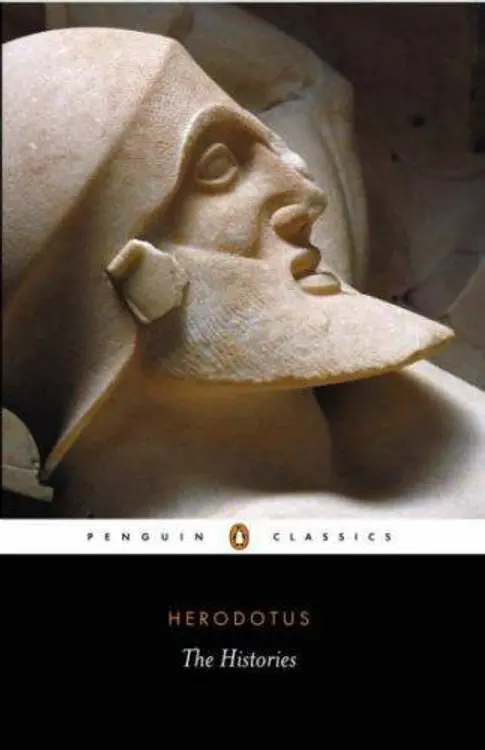
The Histories
Herodotus ; translated by Aubrey De Sélincourt ; revised with introduction and notes by John Marincola.

Odysseus Unbound: The Search for Homer's Ithaca
James Diggle, John Underhill, Robert Bittlestone, Robert Bittlestone
Reader Reviews
No reviews yet for this book.
Be the first to share your thoughts!