
How the war was won
command and technology in the British Army on the western front, 1917-1918
Our rough guess is there are 58,000 words in this book.
At a pace averaging 250 words per minute, this book will take 3 hours and 52 minutes to read. With a half hour per day, this will take 8 days to read.
How long will it take you?
This book will take an estimated to read at a reading speed averaging words per minute. With 30 minutes per day, this will take to read.
Enter your reading speedYou can take one of our WPM reading speed tests to find your reading speed.
Create a free account to track your reading progress, build your reading list, and set reading goals.
We earn a commission on purchases
Word Count
58,000 words, Guess
Page Count
232 pages
Identifiers
- Open LibraryOL1354920M
- ISBN-100415076285
- OCLC Control Number52280891
- OCLC Control Number27975043
- OCLC Control Numberhowwarwaswoncomm0000trav
and 3 more
- Library of Congress Control Number92246801
- LibraryThing1286174
- Goodreads2667609
Classifications
- DDC940.4/21
- LCCD639.S2 T73 1992
Description
This important and sometimes controversial book explains what part the British Expeditionary Force played in bringing the First World War to an end. Tim Travers shows in detail how an Allied victory was achieved. He focuses on the British Army on the Western Front in relation to the themes of command and technology, drawing on a wide range of sources from archives in three countries. The book provides new arguments about the origins of mechanical warfare, the role of Douglas Haig, and the near-collapse of the German army by July 1918. Tim Travers argues that, despite poor leadership, the British army ultimately wore its opponent down by using increasing amounts of technology. Complex and detailed information is presented in a clear and readable form. An introductory paragraph at the beginning of each chapter, combined with numerous maps and photos, also makes the book particularly useful for students.
Subjects
Topics
Times
Other Editions
- How the war was won: command and technology in the British Army on the western front, 1917-1918
Similar Books

Lawrence in Arabia: war, deceit, imperial folly and the making of the modern Middle East
Anderson, Scott
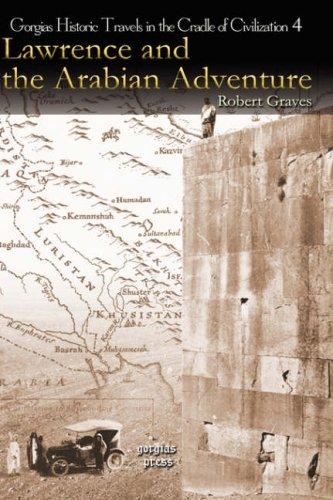
Lawrence and the Arabian Adventure
Robert Graves

Europe's Last Summer: Who Started the Great War in 1914?
David Fromkin

The roses of no man's land
[by] Lyn Macdonald.

Monty: the Field-Marshal, 1944-1976
Nigel Hamilton
War and the Militarization of British Army Medicine, 1793-1830
Catherine Kelly

The First World War
John Keegan

Seven Pillars of Wisdom
T. E. Lawrence
Reader Reviews
No reviews yet for this book.
Be the first to share your thoughts!