
Of moths and men
an evolutionary tale : the untold story of science and the peppered moth
1st American ed.
Our rough guess is there are 94,250 words in this book.
At a pace averaging 250 words per minute, this book will take 6 hours and 17 minutes to read. With a half hour per day, this will take 13 days to read.
How long will it take you?
This book will take an estimated to read at a reading speed averaging words per minute. With 30 minutes per day, this will take to read.
Enter your reading speedYou can take one of our WPM reading speed tests to find your reading speed.
Create a free account to track your reading progress, build your reading list, and set reading goals.
Word Count
94,250 words, Guess
Page Count
377 pages
Identifiers
- Internet Archiveofmothsmenevolut00hoop
- ISBN-100393051218
- ISBN-139780393051216
- Goodreads1890717
- Library of Congress Control Number2002026315
and 3 more
- OCLC Control Number50022818
- Better World Books9780393051216
- Open LibraryOL13630356M
Classifications
- LCCQH375 .H66 2002
- LCCQH375.H66 2002
Description
"As almost every high school biology student once learned, the peppered moths of England were the most renowned insects in the world. Featured in nearly every science textbook, they acquired their fame through the pioneering work of H. B. D. Kettlewell, a British physician and amateur lepidopterist who went into the woods in the 1950s to use this population of moths to capture "evolution in action." He wanted - needed - to prove that the moths were evolving to a darker color in response to industrial pollution, for this would put the finishing touches on Darwin's theory. As Judith Hooper reveals in this groundbreaking work, Kettlewell's ambitions would exceed the strength of his science, and the story of the "peppered moth" would become one of the most pervasive myths in the history of evolutionary biology.". "About a century earlier, when a dark ("melanic") form of the peppered moth appeared in the smoky industrial towns of the British Isles, some people proposed that evolutionary theory might explain why. Resting against the sooty backgrounds, these melanic moths were nearly invisible to birds, and so escaped being preyed upon. Thus more of them survived to reproduce. In rural areas, it was just the opposite. In Darwinian language, natural selection favored the black moths in the grimy mill towns and light moths in rural, unpolluted woodlands. For many decades, this was only a theory, until Kettlewell arrived. He succeeded beyond anyone's expectations, becoming the hero of natural selection, a celebrated figure in a rarefied pantheon of world-class scientists, for his proof of "industrial melanism."". "Behind the success story, however, lay a darker tale. Based on original documents and interviews with scientists on both sides of the Atlantic as well as friends and relatives of the principal characters, Of Moths and Men chronicles the bitter rivalries, academic jealousies, botched science, and emotional heartbreak of the scientists involved. Kettlewell had been lured into the inner circles of Oxford by the celebrated geneticist Edmund Brisco Ford - a fabulous raconteur, a wildly eccentric don, and an often ruthless zealot bent on establishing his theories of how evolution worked and vanquishing all rivals. Although Kettlewell's experiment became the jewel in the crown of Ford's Oxford fiefdom - and evolution's prize experiment - the relationship between the two men would become troubled. At the very moment that the peppered moth experiments were establishing the Oxford biologists as masters of their world, their personal and professional relationships were disintegrating in a miasma of recriminations, intrigue, backbiting, and shattered dreams."--BOOK JACKET.
Subjects
Topics
Other Editions
- Of moths and men: an evolutionary tale : the untold story of science and the peppered moth
Similar Books

The origin of species
by Charles Darwin, with introductions, notes and illustrations.

The descent of man: and selection in relation to sex.
By Charles Darwin ...
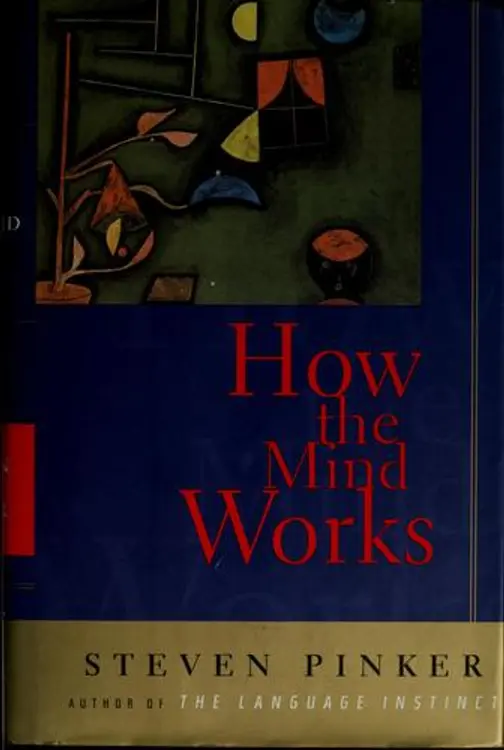
How the Mind Works
Steven Pinker

Ever since Darwin: reflections in natural history
Stephen Jay Gould

The extended phenotype: the gene as the unit of selection
Richard Dawkins.

The selfish gene
Richard Dawkins.

Darwin's Ghost: The Origin of the Species Updated
Steve Jones

A Devil's Chaplain: Selected Essays by Richard Dawkins
Richard Dawkins ; edited by Latha Menon.
Reader Reviews
No reviews yet for this book.
Be the first to share your thoughts!