
Plato and the Socratic dialogue
the philosophical use of a literary form
1st paperback ed.
Our rough guess is there are 107,750 words in this book.
At a pace averaging 250 words per minute, this book will take 7 hours and 11 minutes to read. With a half hour per day, this will take 15 days to read.
How long will it take you?
This book will take an estimated to read at a reading speed averaging words per minute. With 30 minutes per day, this will take to read.
Enter your reading speedYou can take one of our WPM reading speed tests to find your reading speed.
Create a free account to track your reading progress, build your reading list, and set reading goals.
We earn a commission on purchases
Author
Publication
1998 - Cambridge University Press, Cambridge, England
Language
English
Word Count
107,750 words, Guess
Page Count
431 pages
Identifiers
- Open LibraryOL16314889M
- ISBN-100521648300
- OCLC Control Number40437713
- OCLC Control Number33983399
- OCLC Control Numberplatosocraticdia00kahn
and 3 more
- Library of Congress Control Number95048307
- LibraryThing781619
- Goodreads746624
Classifications
- LCCB395
- DDC184
- LCCB395 .K24 1996
Description
This book presents a new paradigm for the interpretation of Plato's early and middle dialogues as a unified literary project, displaying an artistic plan for the expression of a unified world view. The usual assumption of a distinct "Socratic" period in Plato's work is rejected. Literary evidence is presented from other Socratic authors to demonstrate that the Socratic dialogue was a genre of literary fiction, not historical biography. Once it is recognized that the dialogue is a fictional form, there is no reason to look for the philosophy of the historical Socrates in Plato's earlier writings. We can thus read most of the so-called Socratic dialogues proleptically, interpreting them as partial expressions of the philosophical vision more fully expressed in the Phaedo and Republic. Differences between the dialogues are interpreted not as different stages in Plato's thinking but as different literary moments in the presentation of his thought. This indirect and gradual mode of exposition in the earlier dialogues is the artistic device chosen by Plato to prepare his readers for the reception of a new and radically unfamiliar view of reality: a view according to which the "real world" is an invisible realm, the source of all value and all rational structure, the natural homeland of the human soul.
First Sentence
We begin this study of Plato's Socratic dialogues with a survey of what is known about other Socratic writings in the same period.
Excerpt
We begin this study of Plato's Socratic dialogues with a survey of what is known about other Socratic writings in the same period.
Subjects
Other Editions
- Plato and the Socratic dialogue: the philosophical use of a literary form
Similar Books

The Dialogues of Plato / The Seventh Letter
translated by Benjamin Jowett. The seventh letter / translated by J. Harward

Symposium of Plato
Plato.
1h 18m read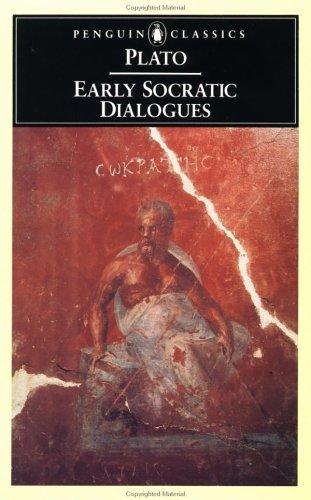
Early Socratic dialogues
Plato ; edited with a general introduction by Trevor J. Saunders.

Xenophon's Memorabilia of Socrates: with English notes, critical and explanatory, the Prolegomena of Kühner, Wiggers' Life of Socrates, etc.
by Charles Anthon.
Crito
Plato., Benjamin Jowett

Platonis Protagoras
with introd., notes and appendices by J. Adam and A.M. Adam
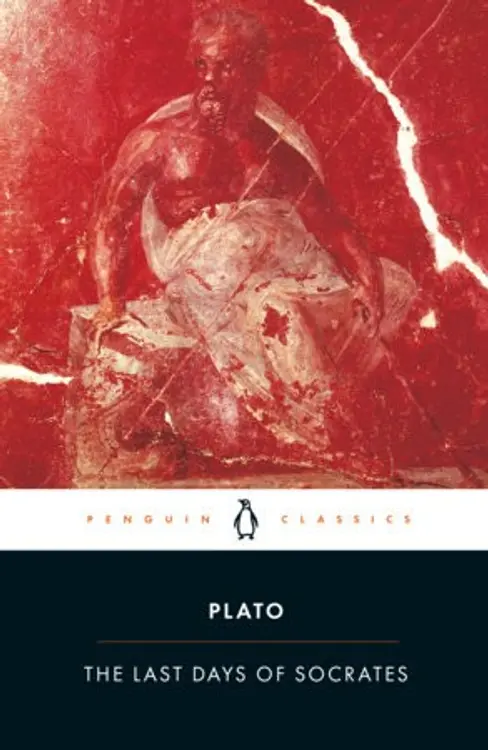
The last days of Socrates: Euthypho, Apology, Crito, Phaedo
Plato ; translated by Hugh Tredennick and Harold Tarrant ; introduction and notes by Harold Tarrant.
Apology
Plato.
44m readReader Reviews
No reviews yet for this book.
Be the first to share your thoughts!