
The Wannsee Conference and the Final Solution
A Reconsideration
1st ed.
Our rough guess is there are 52,750 words in this book.
At a pace averaging 250 words per minute, this book will take 3 hours and 31 minutes to read. With a half hour per day, this will take 7 days to read.
How long will it take you?
This book will take an estimated to read at a reading speed averaging words per minute. With 30 minutes per day, this will take to read.
Enter your reading speedYou can take one of our WPM reading speed tests to find your reading speed.
Create a free account to track your reading progress, build your reading list, and set reading goals.
We earn a commission on purchases
Author
Publication
2002 - Metropolitan Books, New York, New York (State)
Language
English
Word Count
52,750 words, Guess
Page Count
211 pages
Physical Format
Hardback
Identifiers
- Open LibraryOL3955439M
- ISBN-100805068104
- OCLC Control Number48449856
- OCLC Control Numberwannseeconferenc0000rose_y7e9
- Library of Congress Control Number2001056262
and 2 more
- LibraryThing9889
- Goodreads1161386
Classifications
- DDC940.53/18
- LCCD804.3 .R6627 2002
Description
The historical roots of policies that led to the deaths of millions are traced in this thoughtful examination of the Nazis' businesslike planning of genocide at the notorious 1942 conference. But the path to Wannsee may have been less direct than is commonly thought, argues Roseman (History/Univ. of Southampton; A Past in Hiding, 2001). Although Adolf Hitler's violent anti-Semitic outpourings in Mein Kampf (1924) might suggest that the Nazi destruction of European Jewry was the culmination of a methodically blueprinted plan conceived long before the start of WWII, Roseman dismisses the book’s talk of Jewish “extermination” as overheated rhetoric. Initially, he points out, Hitler encouraged Jewish emigration through terror and viciously discriminatory legal measures; later, the Führer discussed a possible Jewish colony in Africa. After the war began, the Nazis pursued a program of deporting German, Polish, and Soviet Jews that turned increasingly murderous and gradually widened under the pressures of total war into a policy of mass murder. By January 20, 1942, when police chief Reinhard Heydrich and his colleagues from a variety of Nazi agencies gathered at Wannsee, the decision had already been made, either by Hitler himself or by others with his knowledge, to pursue a “final solution” to “the Jewish question.” The role of conference participants, Roseman speculates, was essentially “to listen and to nod” as Heydrich described a macabre plan to work Jews to death and kill off any survivors. Heydrich’s principal goal, Roseman asserts, was to establish the primacy of his secret police over the Reich's Jewish policies and to ensure the complicity of other bureaucrats. Heydrich got much of what he wanted; after the meeting he commenced implementing the horrific policy outlined at Wannsee, confident that other Nazis would give his agency a free hand. “Wannsee itself was not the moment of decision,” Roseman concludes, but it “cleared the way for genocide.” A chilling keyhole glimpse of Nazi evil’s bureaucratic banality.
Description
"In early 1947, American officials in Germany stumbled across a document. Headed "Secret Reich matter," it summarized the results of a meeting of top Nazi officials that took place on January 20, 1942, in a grand villa on the shore of Berlin's Lake Wannsee.". "On one level, this document offered clarity: known as the Wannsee Protocol (and included here in full), it tallied up the Jews in Europe, carefully classified half and quarter Jews, and above all laid the groundwork for a "final solution to the Jewish Question." Yet the Protocol, among the most shameful documents in history, remains deeply puzzling. How can we understand this businesslike discussion of genocide? And why was the meeting necessary? Hundreds of thousands of Jews had already been shot by squads in Russia or gassed in the camp at Chelmno. Test murders had been carried out in Auschwitz. Indeed, the most remarkable thing about the Wannsee Conference is that we do not know why it took place."--BOOK JACKET.
Subjects
Topics
Places
Other Editions
- The Wannsee Conference and the Final Solution: A Reconsideration
Similar Books

People in Auschwitz
Hermann Langbein ; translated by Harry Zohn ; foreword by Henry Friedlander

Ordinary men: Reserve Police Battalion 101 and the final solution in Poland
Christopher R. Browning

Different Seasons: Four Novellas
King, Stephen

Eichmann in Jerusalem: a report on the banality of evil
Hannah Arendt ; introduction by Amos Elon.

The Holocaust Industry: Reflections on the Exploitation of Jewish Suffering
Norman G. Finkelstein
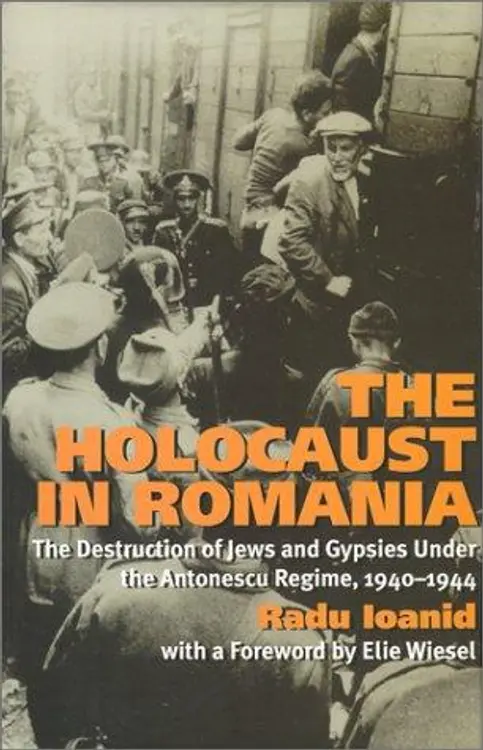
The Holocaust in Romania: the destruction of Jews and Gypsies under the Antonescu regime, 1940-1944
Radu Ioanid ; with a foreword by Elie Wiesel and a preface by Paul A. Shapiro.
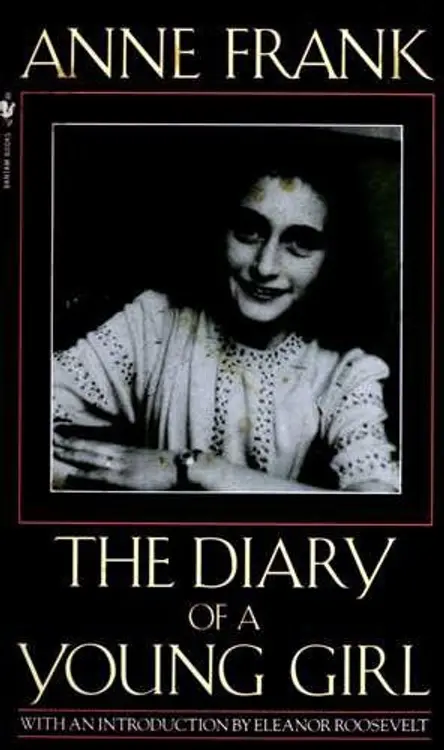
The Diary of a Young Girl
Anne Frank ; translated from the Dutch by B.M. Mooyaart-Doubleday ; with an introduction by Eleanor Roosevelt.
6h 8m readReader Reviews
No reviews yet for this book.
Be the first to share your thoughts!