
The City After the Automobile
An Architect's Vision
Our rough guess is there are 50,000 words in this book.
At a pace averaging 250 words per minute, this book will take 3 hours and 20 minutes to read. With a half hour per day, this will take 7 days to read.
How long will it take you?
This book will take an estimated to read at a reading speed averaging words per minute. With 30 minutes per day, this will take to read.
Enter your reading speedYou can take one of our WPM reading speed tests to find your reading speed.
Create a free account to track your reading progress, build your reading list, and set reading goals.
Word Count
50,000 words, Guess
Page Count
200 pages
Physical Format
Paperback
Identifiers
- Internet Archivecityafterautomob00safd
- ISBN-100813335450
- ISBN-139780813335452
- LibraryThing280569
- OCLC Control Number170848591
and 2 more
- Better World Books9780813335452
- Open LibraryOL8023901M
Classifications
- LCCHT361 .S24 1998eb
- DDC307.76/01/12
- LCCHT151 .S144 1997
Description
In the aftermath of the automobile, with struggling downtowns, spreading suburbs, and blooming private gated communities, are traditional cities becoming obsolete? In The City After the Automobile, internationally acclaimed architect Moshe Safdie passionately comes to the city's defense. Arguing that vital cities are fundamental to civilized society and culture, Safdie and his colleague Wendy Kohn describe how we can rescue cities from their current threat of demise. Today we face a choice: suburban lives of total dependence on our cars or increasingly unworkable urban lifestyles of endless traffic jams, eroding pedestrian street life, and mounting parking problems. Unlike those who want to turn back the clock to pre-industrial enclaves or those who propose science-fiction-like "cyber cities," Safdie believes we can solve our present dilemmas, preserve the best of our urban history, and create future cities of strong public life, cultural richness, and physical beauty. In vivid prose, The City After the Automobile paints a revolutionary vision of the future, one that integrates innovative architecture, technology, and policy to lead us toward richer and more humanistic places to work and live.
First Sentence
There is a consensus today that our cities are not well.
Subjects
Topics
Other Editions
- The City After the Automobile: An Architect's Vision
Similar Books

The Death and Life of Great American Cities
Jane Jacobs.

Edge of empire: postcolonialism and the city
Jane M. Jacobs.
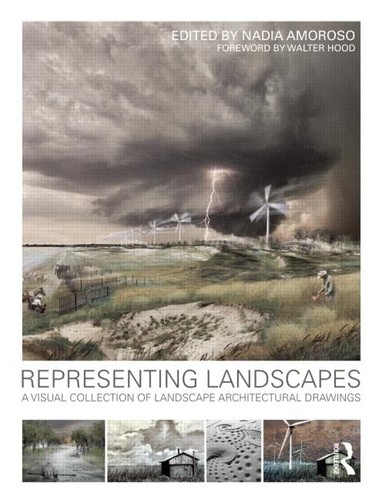
Representing landscapes: a visual collection of landscape architectural drawings
edited by Nadia Amoroso
Planning Singapore: The Experimental City
Belinda Yuen, Stephen Hamnett

Urban design: street and square
Cliff Moughtin

Urban Retrofitting for Sustainability: Mapping the Transition to 2050
Tim Dixon
Reader Reviews
No reviews yet for this book.
Be the first to share your thoughts!