
Contingency, irony, and solidarity
Our rough guess is there are 50,250 words in this book.
At a pace averaging 250 words per minute, this book will take 3 hours and 21 minutes to read. With a half hour per day, this will take 7 days to read.
How long will it take you?
This book will take an estimated to read at a reading speed averaging words per minute. With 30 minutes per day, this will take to read.
Enter your reading speedYou can take one of our WPM reading speed tests to find your reading speed.
Create a free account to track your reading progress, build your reading list, and set reading goals.
We earn a commission on purchases
Author
Publication
1989 - Cambridge University Press, Cambridge, England
Language
English
Word Count
50,250 words, Guess
Page Count
201 pages
Identifiers
- Open LibraryOL2046258M
- ISBN-100521353815
- OCLC Control Number18290785
- OCLC Control Numbercontingencyirony00rort_700
- Library of Congress Control Number88023358
and 2 more
- LibraryThing1160573
- Goodreads1240246
Classifications
- DDC401
- LCCP106 .R586 1989
Description
In this book Rorty argues that thinkers such as Nietzsche, Freud, and Wittgenstein have enabled societies to see themselves as historical contingencies, rather than as expressions of underlying, ahistorical human nature or as realizations of suprahistorical goals. This ironic perspective on the human condition is valuable on a private level, although it cannot advance the social or political goals of liberalism. In fact Rorty believes that it is literature not philosophy that can do this, by promoting a genuine sense of human solidarity. A truly liberal culture, acutely aware of its own historical contingency, would fuse the private, individual freedom of the ironic, philosophical perspective with the public project of human solidarity as it is engendered through the insights and sensibilities of great writers. The book has a characteristically wide range of reference from philosophy through social theory to literary criticism. It confirms Rorty's status as a uniquely subtle theorist, whose writing will prove absorbing to academic and nonacademic readers alike.
Description
American philosopher Richard Rorty argues that thinkers such as Nietzsche, Freud, and Wittgenstein have enabled societies to see themselves as historical contingencies, rather than as expressions of underlying, ahistorical human nature, or as realizations of suprahistorical goals. This ironic perspective on the human condition is valuable but it cannot advance Liberalism's social and political goals. In fact, Rorty believes that it is literature and not philosophy that can do this, by promoting a genuine sense of human solidarity. Specifically, it is novelists such as Orwell and Nabokov who succeed in awakening us to the cruelty of particular social practices and individual attitudes. Thus, a truly liberal culture would fuse the private, individual freedom of the ironic, philosophical perspective with the public project of human solidarity as it is engendered through the insights and sensibilities of great writers. Rorty uses a wide range of references - from philosophy to social theory to literary criticism - to elucidate his beliefs.
Subjects
Topics
Other Editions
- Contingency, irony, and solidarity
Similar Books

Rules and Representations (Columbia Classics in Philosophy)
Noam Chomsky

Of grammatology
by Jacques Derrida ; translated by Gayatri Chakravorty Spivak.

Being and Time
Martin Heidegger
An inquiry into meaning and truth.
Bertrand Russell
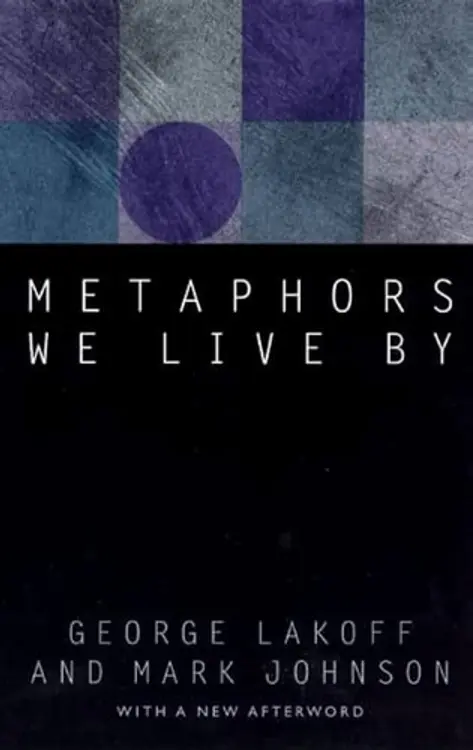
Metaphors we live by
George Lakoff and Mark Johnson.

Tractatus logico-philosophicus
Ludwig Wittgenstein ; translated by C.K. Ogden ; with an introduction by Bertrand Russell.
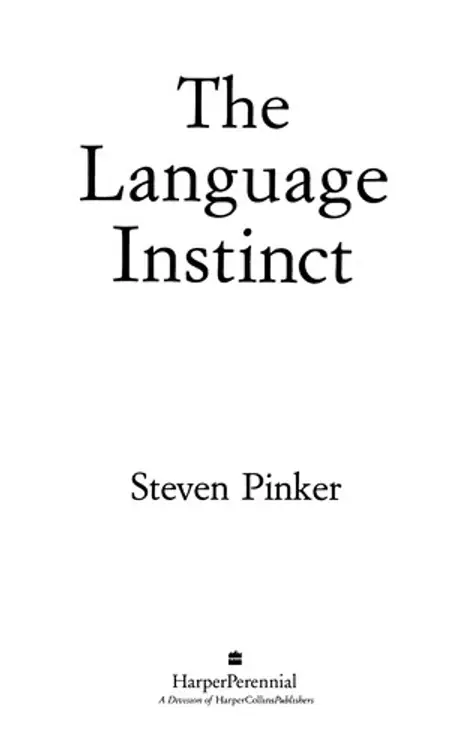
The Language Instinct: How the Mind Creates Language (P.S.)
Steven Pinker, Garikoitz Knörr de Santiago
Reader Reviews
No reviews yet for this book.
Be the first to share your thoughts!