
The Analyst and the Mystic
Psychoanalytic Reflections on Religion and Mysticism
Our rough guess is there are 22,750 words in this book.
At a pace averaging 250 words per minute, this book will take 1 hours and 31 minutes to read. With a half hour per day, this will take 3 days to read.
How long will it take you?
This book will take an estimated to read at a reading speed averaging words per minute. With 30 minutes per day, this will take to read.
Enter your reading speedYou can take one of our WPM reading speed tests to find your reading speed.
Create a free account to track your reading progress, build your reading list, and set reading goals.
Word Count
22,750 words, Guess
Page Count
91 pages
Physical Format
Hardcover
Identifiers
- ISBN-100226422836
- ISBN-139780226422831
- Goodreads1335780
- Open LibraryOL9622650M
Description
In this original contribution to the psychology of religion, the Indian psychoanalyst Sudhir Kakar focuses on the phenomenon of ecstatic mysticism. Reviewing and revising traditional Freudian views of religion and drawing on the work of "relational" theorists such as Winnicott and Kohut, Kakar compares the mystical journey to the analytical process. In both he sees a creative immersion, with its potential risk of phases of chaos and disintegration. The centerpiece of The Analyst and the Mystic is the absorbing story of the nineteenth-century Bengali mystic and Hindu saint Sri Ramakrishna. Using Ramakrishna's life as a case study, Kakar discusses in depth three interacting factors that he feels may be essential in the making of an ecstatic mystic: particular life historical experiences, the presence of a specific artistic or creative gift, and a facilitating cultural environment. Kakar goes beyond the traditional psychoanalytic interpretation of Ramakrishna's mystical visions and practices. He clarifies their contribution to the psychic transformation of a mystic and offers fresh insight into the relation between sexuality and ecstatic mysticism. Through a comparison of the healing techniques of the mystical guru and those of the analyst, Kakar highlights the difference in their healing objectives and reveals the positive psychological aspects of the religious experience.
First Sentence
Of the many ways of inner transformation known to man, the mystical path is perhaps one of the most ancient, universal, and highly regarded, even when its practitioners have often lived in an uneasy truce, if not in frank antagonism, with the established religions of their societies.
Subjects
Topics
Places
Other Editions
- The Analyst and the Mystic: Psychoanalytic Reflections on Religion and Mysticism
Similar Books

Sensible Ecstasy: Mysticism, Sexual Difference, and the Demands of History (Religion and Postmodernism Series)
Amy Hollywood
Psychoanalysis and religion
Erich Fromm

The Varieties of Religious Experience: A Study In Human Nature (Routledge Classics)
William James
The collected works of C.G. Jung
editors Sir Herbert Read ... [et al]. Vol.9, pt.2, Aion : researches into the phenomenology of self.

Beyond the chains of illusion: my encounter with Marx and Freud. --
Erich Fromm

The Varieties of Religious Experience
James, William, Robert H. Abzug
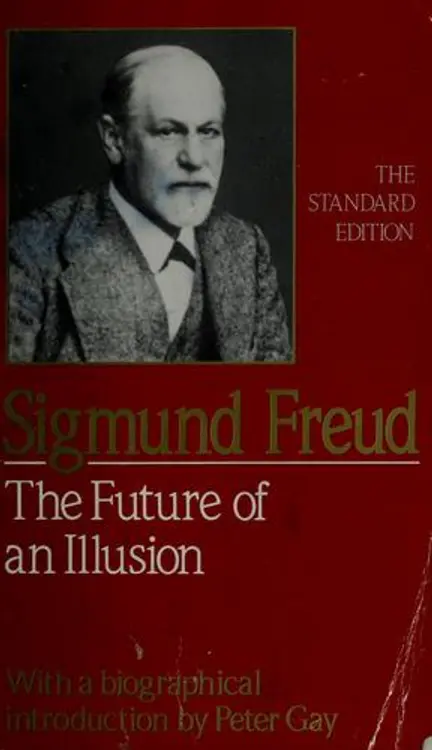
The future of an illusion
Sigmund Freud ; translated and edited by James Strachey, with a biographical introduction by Peter Gay

The Righteous Mind: Why Good People Are Divided By Politics And Religion
Antonio Kuntz, Jonathan Haidt
Reader Reviews
No reviews yet for this book.
Be the first to share your thoughts!