
Hacking
the art of exploitation
2nd ed.
Our rough guess is there are 118,000 words in this book.
At a pace averaging 250 words per minute, this book will take 7 hours and 52 minutes to read. With a half hour per day, this will take 16 days to read.
How long will it take you?
This book will take an estimated to read at a reading speed averaging words per minute. With 30 minutes per day, this will take to read.
Enter your reading speedYou can take one of our WPM reading speed tests to find your reading speed.
Create a free account to track your reading progress, build your reading list, and set reading goals.
Author
Publication
2008 - No Starch Press, San Francisco, CA, California
Language
English
Word Count
118,000 words, Guess
Page Count
472 pages
Identifiers
- Internet Archivehackingartofexpl0000eric_g6n4
- ISBN-139781593271442
- ISBN-101593271441
- LibraryThing6619162
- WikidataQ5637304
and 6 more
- Goodreads1784196
- Library of Congress Control Number2007042910
- OCLC Control Number175218338
- OCLC Control Number219606838
- Better World Books9781593271442
- Open LibraryOL18500076M
Classifications
- DDC005.8
- LCCQA76.9.A25 E75 2008
- LCCQA76.9.A25E75 2008
Description
Hacking is the art of creative problem solving, whether that means finding an unconventional solution to a difficult problem or exploiting holes in sloppy programming. Many people call themselves hackers, but few have the strong technical foundation needed to really push the envelope. Rather than merely showing how to run existing exploits, author Jon Erickson explains how arcane hacking techniques actually work. To share the art and science of hacking in a way that is accessible to everyone, Hacking: The Art of Exploitation, 2nd Edition introduces the fundamentals of C programming from a hacker's perspective. The included LiveCD provides a complete Linux programming and debugging environment-all without modifying your current operating system. Use it to follow along with the book's examples as you fill gaps in your knowledge and explore hacking techniques on your own. Get your hands dirty debugging code, overflowing buffers, hijacking network communications, bypassing protections, exploiting cryptographic weaknesses, and perhaps even inventing new exploits. This book will teach you how to: Program computers using C, assembly language, and shell scripts Corrupt system memory to run arbitrary code using buffer overflows and format strings Inspect processor registers and system memory with a debugger to gain a real understanding of what is happening Outsmart common security measures like nonexecutable stacks and intrusion detection systems Gain access to a remote server using port-binding or connect-back shellcode, and alter a server's logging behavior to hide your presence Redirect network traffic, conceal open ports, and hijack TCP connections Crack encrypted wireless traffic using the FMS attack, and speed up brute-force attacks using a password probability matrix Hackers are always pushing the boundaries, investigating the unknown, and evolving their art. Even if you don't already know how to program, Hacking: The Art of Exploitation, 2nd Edition will give you a complete picture of programming, machine architecture, network communications, and existing hacking techniques. Combine this knowledge with the included Linux environment, and all you need is your own creativity.
Subjects
Other Editions
- Hacking: the art of exploitation
Similar Books

Gray Hat Hacking The Ethical Hacker's Handbook, Fourth Edition
Stephen Sims, Branko Spasojevic, Chris Eagle, Allen Harper, Linda Martinez, Shon Harris, Daniel Regalado, Ryan Linn, Michael Baucom, Jonathan Ness

Network Security Essentials (2nd Edition)
Stallings, William.
Introduction to Modern Cryptography
Yehuda Lindell, Jonathan Katz, Jonathan Katz

Malicious Bots: An Inside Look into the Cyber-Criminal Underground of the Internet
Ken Dunham, Jim Melnick
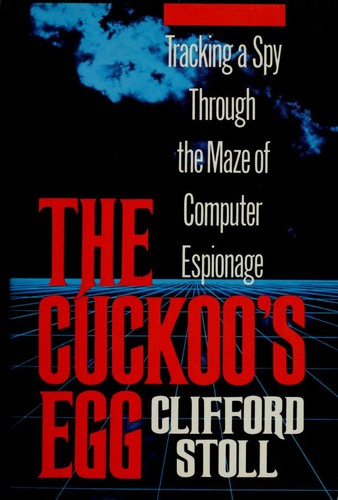
The Cuckoo’s Egg: Tracking a Spy Through the Maze of Computer Espionage
Clifford Stoll.
Web Application Hacker's Handbook: Discovering and Exploiting Security Flaws
Dafydd Stuttard, Dafydd Stuttard, Marcus Pinto

Virtual Private Networks
Charlie Scott, Paul Wolfe, and Mike Erwin.

OSSEC Host-Based Intrusion Detection Guide
Andrew Hay, Rory Bray, Daniel Cid
Reader Reviews
No reviews yet for this book.
Be the first to share your thoughts!