
Diary of Dawid Sierakowiak
Five Notebooks from the Lodz Ghetto
We couldn't estimate the reading time for this book.
Publication
1998 - Oxford University Press, Incorporated
Language
English
Word Count
0 words, Guess
Page Count
0 pages
Identifiers
- ISBN-139780195313505
- ISBN-10019531350X
- Better World Books9780195313505
- Open LibraryOL46099478M
Classifications
- LCCDS135.P62 L4434 199
- DDC940.53/18
- LCCDS135.P62 L64434 1996
Description
"In the evening I had to prepare food and cook supper, which exhausted me totally. In politics there's absolutely nothing new. Again, out of impatience I feel myself beginning to fall into melancholy. There is really no way out of this for us." This is Dawid Sierakowiak's final diary entry. Soon after writing it, the young author died of tuberculosis, exhaustion, and starvation - the Holocaust syndrome known as "ghetto disease." After the liberation of the Lodz Ghetto, his notebooks were found stacked on a cookstove, ready to be burned for heat. Young Sierakowiak was one of more than 60,000 Jews who perished in that notorious urban slave camp, a man-made hell which was the longest surviving concentration of Jews in Nazi Europe. . The diary comprises a remarkable legacy left to humanity by its teenage author. It is one of the most fastidiously detailed accounts ever rendered of modern life in human bondage. Off mountain climbing and studying in southern Poland during the summer of 1939, Dawid begins his diary with a heady enthusiasm to experience life, learn languages, and read great literature. He returns home under the quickly gathering clouds of war. Abruptly Lodz is occupied by the Nazis, and the Sierakowiak family is among the city's 200,000 Jews who are soon forced into a sealed ghetto, cut off from the outside world. The wonder of the diary is that every bit of hardship yields wisdom from Dawid's remarkable intellect. Reading it, you become a prisoner with him in the ghetto, and with disconcerting intimacy you begin to experience the incredible process by which the vast majority of the Jews of Europe were annihilated in World War II. Significantly, the youth has no doubt about the consequence of deportation out of the ghetto: "Deportation into scrap metal," he calls it. A committed communist and the unit leader of an underground organization, he crusades for more food for the ghetto's school children. But when invited to pledge his life to a suicide resistance squad, he writes that he cannot become a "professional revolutionary." He owes his strength and life to the care of his family.
First Sentence
Only two months after their invasion of Poland on September 1, 1939, the Nazis began drawing up specific plans for the forced concentration in an urban slave camp of the vast Jewish population that had grown up in the city of Lodz.
Excerpt
Only two months after their invasion of Poland on September 1, 1939, the Nazis began drawing up specific plans for the forced concentration in an urban slave camp of the vast Jewish population that had grown up in the city of Lodz.
Subjects
Topics
Places
People
Other Editions
- Diary of Dawid Sierakowiak: Five Notebooks from the Lodz Ghetto
Similar Books
The night trilogy: Night ; Dawn ; Day / Elie Wiesel.
Elie Wiesel
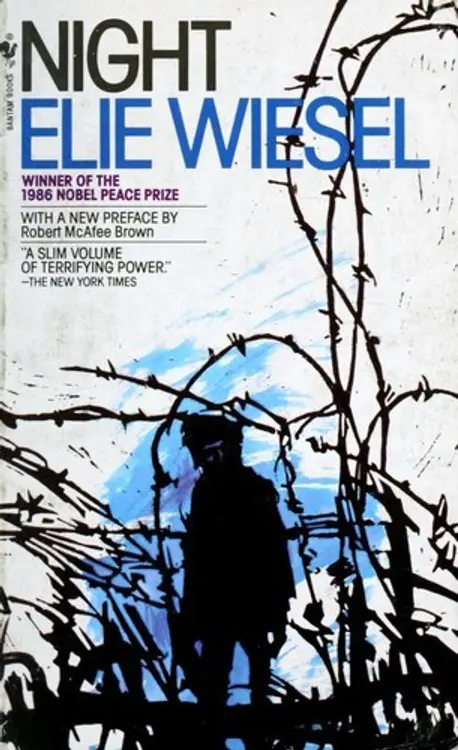
Night
Elie Wiesel ; translated from the French by Stella Rodway ; foreword by Franc̦ois Mauriac ; preface for the twenty-fifth anniversary edition by Robert McAfee Brown.
2h 39m read
The Pianist: The Extraordinary Story of One Man's Survival in Warsaw, 1939-45
Władysław Szpilman, Anthea Bell, Wilm Hosenfeld

All but my life
by Gerda Weissman Klein.
Reader Reviews
No reviews yet for this book.
Be the first to share your thoughts!