
The Innovator's Dilemma
When New Technologies Cause Great Firms to Fail
Our rough guess is there are 72,000 words in this book.
At a pace averaging 250 words per minute, this book will take 4 hours and 48 minutes to read. With a half hour per day, this will take 10 days to read.
How long will it take you?
This book will take an estimated to read at a reading speed averaging words per minute. With 30 minutes per day, this will take to read.
Enter your reading speedYou can take one of our WPM reading speed tests to find your reading speed.
Create a free account to track your reading progress, build your reading list, and set reading goals.
Publication
2013-11-19 - Harvard Business Review Press
Language
English
Word Count
72,000 words, Guess
Page Count
288 pages
Physical Format
Hardcover
Identifiers
- Open LibraryOL27581964M
- ISBN-139781422196021
- ISBN-10142219602X
- OCLC Control Number826444565
- Library of Congress Control Number2013020203
and 1 more
- Amazon142219602X
Classifications
- LCCHD53.C49 2013
- DDC658
Description
In his book, The Innovator's Dilemma [3], Professor Clayton Christensen of Harvard Business School describes a theory about how large, outstanding firms can fail "by doing everything right." The Innovator's Dilemma, according to Christensen, describes companies whose successes and capabilities can actually become obstacles in the face of changing markets and technologies. ([Source][1]) This book takes the radical position that great companies can fail precisely because they do everything right. It demonstrates why outstanding companies that had their competitive antennae up, listened astutely to customers, and invested aggressively in new technologies still lost their market leadership when confronted with disruptive changes in technology and market structure. And it tells how to avoid a similar fate. Using the lessons of successes and failures of leading companies, The Innovator's Dilemma presents a set of rules for capitalizing on the phenomenon of disruptive innovation. These principles will help managers determine when it is right not to listen to customers, when to invest in developing lower-performance products that promise lower margins, and when to pursue small markets at the expense of seemingly larger and more lucrative ones. - Jacket flap. [1]: http://web.mit.edu/6.933/www/Fall2000/teradyne/clay.html
First Sentence
WHEN I BEGAN my search for an answer to the puzzle of why the best firms can fail, a friend offered some sage advice.
Description
"In this revolutionary bestseller, innovation expert Clayton M. Christensen says outstanding companies can do everything right and still lose their market leadership--or worse, disappear altogether. And not only does he prove what he says, but he tells others how to avoid a similar fate. Focusing on "disruptive technology," Christensen shows why most companies miss out on new waves of innovation. Whether in electronics or retailing, a successful company with established products will get pushed aside unless managers know when to abandon traditional business practices. Using the lessons of successes and failures from leading companies, The Innovator's Dilemma presents a set of rules for capitalizing on the phenomenon of disruptive innovation. Find out: When it is right not to listen to customers. When to invest in developing lower-performance products that promise lower margins. When to pursue small markets at the expense of seemingly larger and more lucrative ones. Sharp, cogent, and provocative, The Innovator's Dilemma is one of the most talked-about books of our time--and one no savvy manager or entrepreneur should be without"--
Subjects
Topics
Other Editions
- The Innovator's Dilemma: When New Technologies Cause Great Firms to Fail
Show 13 more editions
3 other editions not shown
Similar Books

The innovator's solution: creating and sustaining successful growth
Clayton M. Christensen, Michael E. Raynor
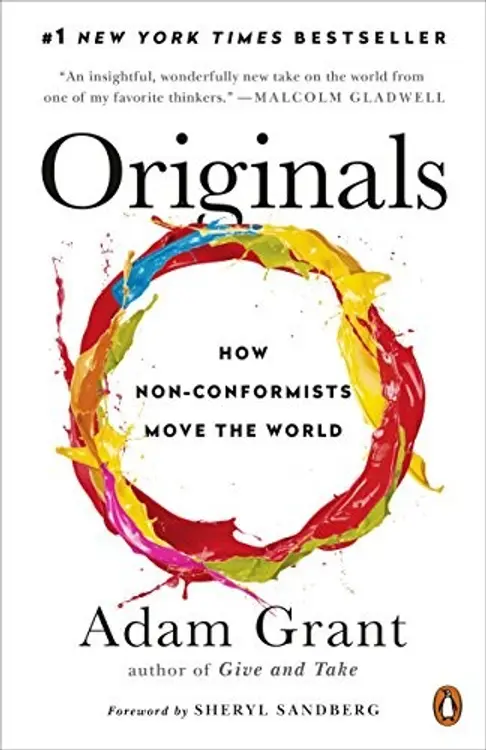
Originals: How Non-Conformists Move the World
Adam M. Grant
The art of war
Sun tzu ; translated and with an introduction by Samuel B. Griffith ; with a foreword by B.H. Liddell Hart.

The E-myth revisited: why most small businesses don't work and what to do about it
Michael E. Gerber

The outsiders: eight unconventional CEOs and their radically rational blueprint for success
William N. Thorndike, Jr

The Book of Five Rings
Brian Nishii, William Scott Wilson, Miyamoto Musashi, Karlo Toreles, jose manquel, Kenji Tokitsu, Thomas Cleary
2h 36m readReader Reviews
No reviews yet for this book.
Be the first to share your thoughts!